

A new HVAC filter can’t catch dust that slips around the filter, comes in through doors, or rises from carpet and fabric. We see this often in East Tennessee homes, especially when duct leaks or outdoor air add to the indoor load. Here are 10 likely causes, plus the fix that fits each one.
1. Jack Frost Heating & Air Conditioning, Inc.
Fast answers start with finding the path dust takes through your home. At Jack Frost Heating & Air Conditioning, Inc., we check the filter fit, return airflow, ductwork, and indoor air quality before suggesting a fix.

That matters because a new filter only cleans air that passes through it. If air slips around the filter or leaks into duct runs near an attic, crawl space, or garage, the filter misses the problem. We can also look for signs such as dark marks near vents, a filter that loads up too soon, or one room that gets dusty much faster than the rest.
Our work covers homeowners, small businesses, and rental properties around Seymour and Knoxville. We use transparent, honest pricing and explain the repair before work begins. If the cause is a dirty duct, poor filter seal, or need for better air cleaning, we’ll point to that specific issue instead of guessing.
For a useful first check, note where dust returns first after cleaning. That clue can save time during an HVAC visit. You can also read why dust keeps coming back after cleaning before you schedule an inspection.
2. Poor Filter Fit and Air Bypass, When Dust Goes Around the Filter
A tight filter seal keeps more dust in the return path instead of sending it through the blower. If your house stays dusty with a new filter, check whether the filter sits flat and fills the slot.

A gap along one edge can let return air bypass the filter. A filter installed backward can also reduce its intended performance. Some return grilles have loose frames, while older filter racks may have bent metal or missing seals.
Dust can then reach the blower and indoor coil. It can also move back through the supply vents. A filter that looks dirty after a short time is a clue, but it doesn’t prove the filter itself is bad.
Never force a thicker filter into a slot that wasn’t built for it. Extra resistance can reduce airflow and strain the system. We can measure the opening, check the direction arrow, and seal the rack when needed.
3. Filter Choices and Household Dust Sources
The right filter balances particle capture with the airflow your HVAC system can handle. Filter type is a likely answer when a new filter is in place but dust still settles fast.

Construction and remodeling can add dust to the home, so inspect filters monthly and replace them more often, clean surfaces, and use pre-filters. HEPA filters are much denser, so the system must be designed to move air through them safely. Living near busy roads may call for a higher MERV filter, sealed duct leaks, and increased ventilation.
The standard description of HEPA filtration focuses on high-efficiency particle capture, but a HEPA filter is not automatically right for every central HVAC system. A dense filter in the wrong cabinet may cut airflow. Ask an HVAC technician to check system pressure before making a major filter change.
| Dust source or filter choice | Best fit | Watch for |
|---|---|---|
| Construction and remodeling | Homes near construction sites or unpaved areas | Inspect filters monthly and replace more often; clean surfaces; use pre-filters |
| Living near busy roads | Homes exposed to nearby road dust | Upgrade to a higher MERV filter, seal duct leaks, and increase ventilation |
| HEPA | Systems built to support dense filtration | May restrict airflow if retrofitted |
| Dirty ductwork | Homes with heavy dust accumulation around ductwork | Clean ductwork regularly, seal leaks, and consider a whole-house air purifier |
We recommend changing the filter based on its condition and the home’s dust load. Remodeling, pets, smoke, and a busy road can shorten that interval.
4. Dirty or Leaky Ductwork, Dust From Attics, Crawl Spaces, and Garages
Sealed ductwork helps keep unwanted particles out of the air stream. If dust returns near several vents, leaky ductwork deserves a close look.

Duct runs may pass through an attic, crawl space, or garage. Gaps at joints can pull dusty air into the system when the blower runs. Leaks can also send conditioned air into those spaces, which makes the system work harder.
Visible dust around a vent does not prove the duct is dirty. The stronger clues are dust concentrated near one run, a loose connection, or a filter that gets dirty far faster than expected. A technician can inspect accessible sections and seal suitable joints.
Cleaning helps when dust has built up inside the ductwork. Sealing comes first when the system is pulling air from a dusty space. Our preventive HVAC maintenance guidance explains why routine system checks can catch airflow problems before they spread.
5. Limited Ventilation and Air Cleaning, Sealed Homes Need Particle Control
Better air movement can reduce the dust that keeps circling through a closed home. Modern homes hold conditioned air well, but that same air may recirculate particles again and again.

Targeted air cleaning may help with airborne particles. A whole-house air purifier works through the HVAC system, so its fit and airflow need careful review. Neither option removes dust sitting in carpet or bedding.
Filtration and source control are separate parts of cleaner indoor air. That matches what we see in homes. You need to reduce the source, then capture what remains airborne.
Humidity also affects how particles behave. Very dry air can let light particles stay airborne longer and may increase static on plastic surfaces. Very damp air creates other indoor problems. We check the home instead of chasing one perfect number.
For system based filtration, our guide to choosing a whole-house air purifier can help you compare the main setup questions.
6. People and Pets, Skin Cells, Dander, Hair, and Fabric Fibers
People and pets supply a steady indoor source of dust. That’s normal, even in a well-kept home.

Skin flakes, hair, pet dander, and fibers from clothing all settle on floors and furniture. Walking across a rug can lift those particles back into the air. Making a bed or shaking a blanket can do the same.
Bedrooms often collect more dust because they hold bedding, pillows, rugs, and other soft goods. Wash sheets on a regular schedule. Keep fewer loose blankets and pillows where dust builds up. Groom pets outside when possible, then clean their beds and favorite furniture more often.
Cleaning method matters too. A vacuum with poor filtration can send fine dust back into the room. Use slow passes on rugs, empty the canister outside when possible, and damp dust hard surfaces from high to low.
We can help when one bedroom or pet area stays dusty despite a steady cleaning routine. The pattern often points to a source, not a defective filter.
7. Laundry and Bathroom Tissue, Everyday Fibers That Become Dust
Small household fibers can add up quickly. Laundry rooms and bathrooms are easy places to miss when you search for the reason your home gets dusty.

Lint can escape when a dryer vent or its flexible tube has a tear. A loose band at the dryer connection can also let lint spill into the room. Clean the vent path as part of normal dryer care, and check the tube for damage.
Bathroom tissue creates light fibers through normal use. You don’t need to switch products to address it. Vacuum the bathroom floor and nearby surfaces on a regular schedule. A damp cloth can collect what dry dusting sends back into the air.
Keep laundry baskets closed when possible. Shake clothes inside the dryer rather than over a bedroom floor. These small changes won’t stop all dust, but they reduce the amount that starts indoors.
8. Carpets and Entry Points, Flooring, Doormats, Shoes, and Road Dust
Floor care often changes dust levels faster than another filter swap. Carpet holds particles until foot traffic releases them.
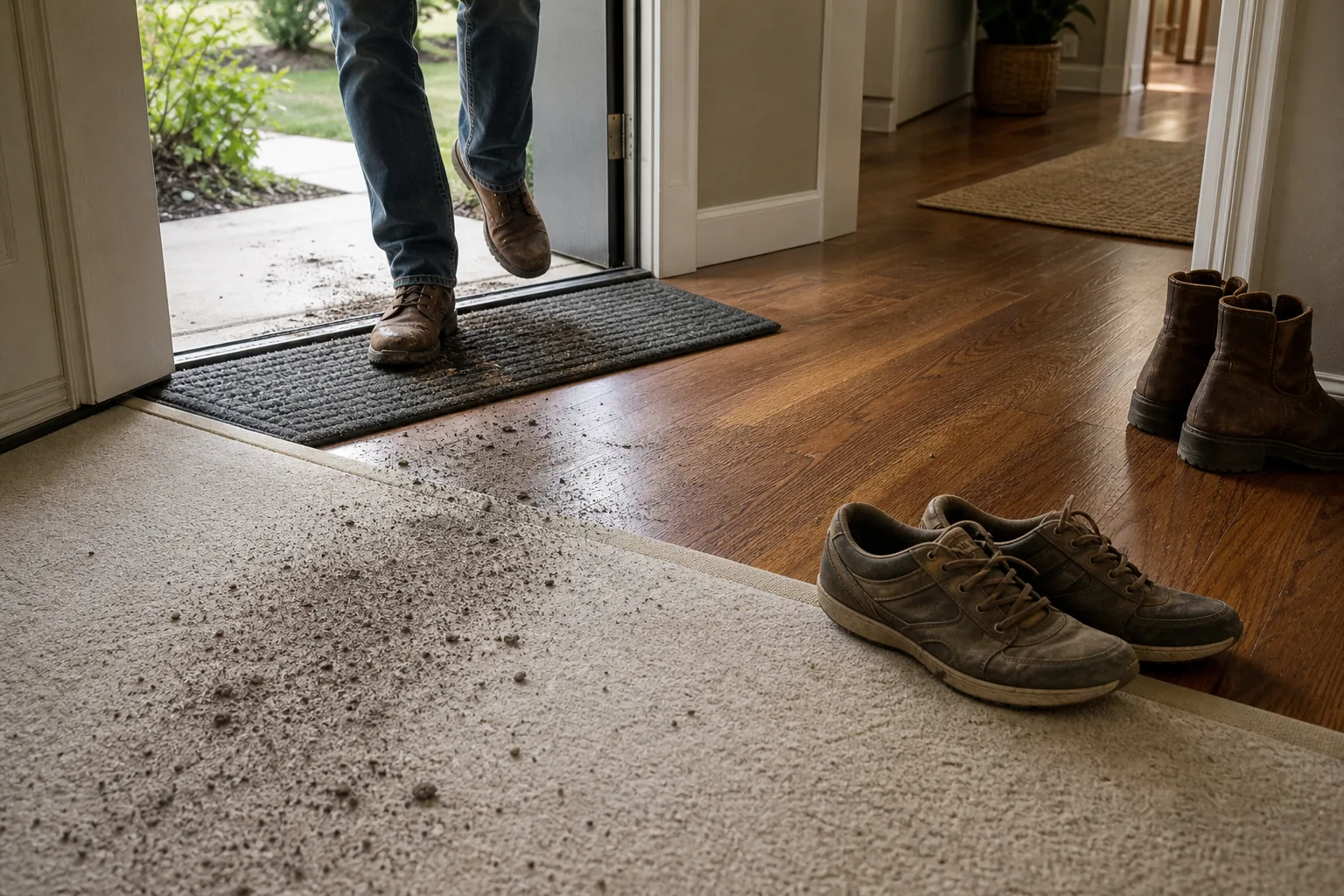
Vacuum high traffic areas more often, especially the entry, hall, and living room. Use slow passes and clean the vacuum’s filter as directed. Damp mop hard floors after vacuuming. Sweeping alone can lift fine dust before it settles again.
Place a mat outside the main door and another just inside. Clean both mats before they become loaded with grit. Removing shoes at the door also cuts down on soil and road dust entering the home.
Keep windows closed during dusty outdoor conditions. East Tennessee weather can shift quickly, and smoke or road dust can load a filter sooner than normal. If dust returns near one door or window, inspect the seal around that opening.
9. Static Electronics and Low Humidity, Dust Magnets Around the Home
Static can make TVs, monitors, and plastic surfaces look dusty soon after cleaning. Those surfaces attract light particles that are already floating through the room.
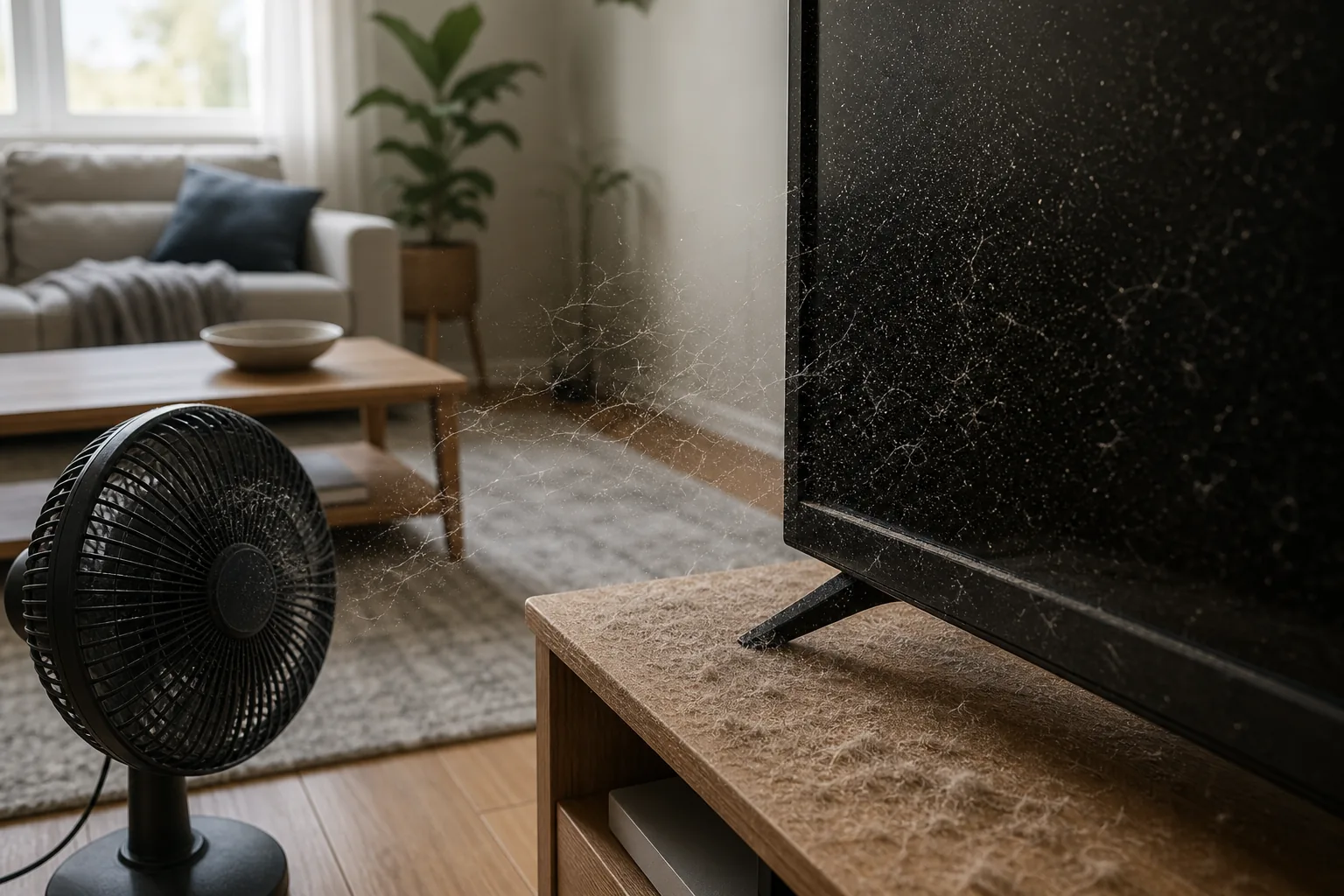
Dry air can increase static, especially during heating season. Dust then clings to screens and smooth plastic instead of falling right away. Use a clean cloth made for the surface. Turn electronics off and let them cool before wiping.
Do not spray cleaner directly onto a screen. Apply a small amount to the cloth if the manufacturer allows it. Keep vents on electronics clear, since a blocked device can run hotter while collecting dust.
A humidifier may help if indoor air is unusually dry, but too much moisture can cause a different set of problems. Measure first. If dust and comfort issues happen together, Jack Frost Heating & Air Conditioning, Inc. can check airflow and indoor air quality as one system.
10. Construction and Outdoor Conditions, Remodeling, Roads, Smoke, and Seasonal Dust
Outdoor dust can overwhelm a new filter when the source stays active. Remodeling, nearby road traffic, unpaved surfaces, and smoke all increase the load entering your home.
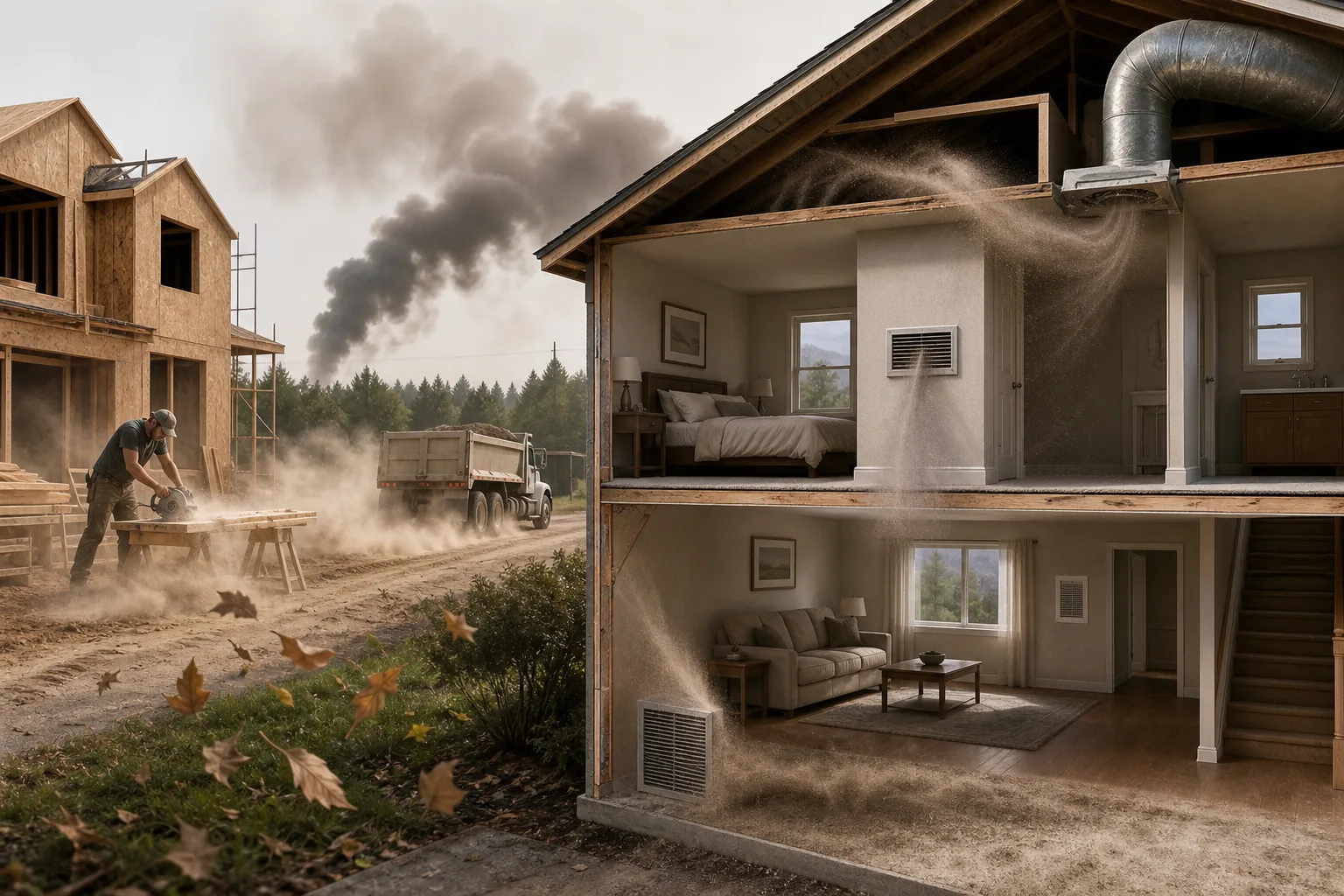
During construction, inspect the filter more often and keep doors between work areas and living areas closed. Use a pre-filter where it fits the system. Clean surfaces with a damp cloth instead of dry wiping, which can stir dust into the air.
Busy roads can add fine outdoor particles through open windows, door gaps, and duct leaks. Smoke events call for closed windows and more frequent filter checks. Run a properly sized air cleaner if you have one, but don’t expect it to solve a leak or active construction source.
Look for timing. If dust spikes after a renovation, a windy day, or a smoke event, the cause may sit outside the HVAC system. If it continues after conditions improve, schedule a duct and airflow check.
FAQ
Why is my house dusty even with a new filter?
Your house may stay dusty because particles never reach the filter. Dust can come from carpet, bedding, pets, outdoor air, or leaky ductwork. A filter gap can also let air bypass the media. Check the fit first, then note where dust returns. That pattern can point to a room source or an HVAC airflow problem.
Can a better HVAC filter stop dust?
A better filter can reduce airborne dust, but it cannot stop every source. Filter performance varies by design, while dense HEPA media may need compatible equipment. The filter must fit tightly and allow safe airflow. Ask an HVAC professional before moving to a much denser filter.
How do I know if my ducts are making my house dusty?
Leaky ducts may be involved when dust is concentrated near certain vents, a filter gets dirty unusually fast, or duct runs pass through dusty spaces. Dust near one register alone is not proof. An inspection can check joints, returns, and accessible attic or crawl space runs. Sealing leaks may help more than repeated duct cleaning.
Will an air purifier help with household dust?
Room air cleaning can help with airborne dust when the device is sized for the room and has open airflow around it. It won’t remove dust trapped in carpet, fabric, or bedding. Place it where people spend time, keep its intake clear, and maintain its filter. Use source control and floor cleaning alongside air filtration.
Does low humidity make a house dustier?
Low humidity can make static stronger, which helps dust cling to screens and plastic surfaces. It may also keep light particles moving longer. A humidifier can help when the air is too dry, but excess moisture brings other risks. Measure indoor conditions and address leaks, cleaning habits, and filtration too.
Conclusion
Start with the filter seal and the dust’s return location. If you find gaps, suspect duct leakage, or see dust build up unusually fast, let Jack Frost Heating & Air Conditioning, Inc. inspect the system and recommend a focused fix. That path usually works better than buying another filter and hoping for comfort that lasts.