

Ever wonder why your AC feels stronger once the sun goes down? The short answer is that cooler air outside gives your system a break. Below we explain the science, the tech tricks and the warning signs that tell you when night‑time gains hide a problem.
Why Outdoor Conditions Make HVAC Systems Work Less at Night
Nighttime air in East Tennessee usually drops 10‑15°F compared with the afternoon high. That temperature dip means the compressor doesn’t have to work as hard to pull heat from inside your home. A cooler condenser coil can reject heat more efficiently, so the system cycles shorter and uses less electricity.
Lower outdoor humidity also helps. When the air is dry, the evaporator coil stays colder longer, which improves the refrigerant’s ability to absorb indoor heat. The result is a steadier, more consistent airflow.
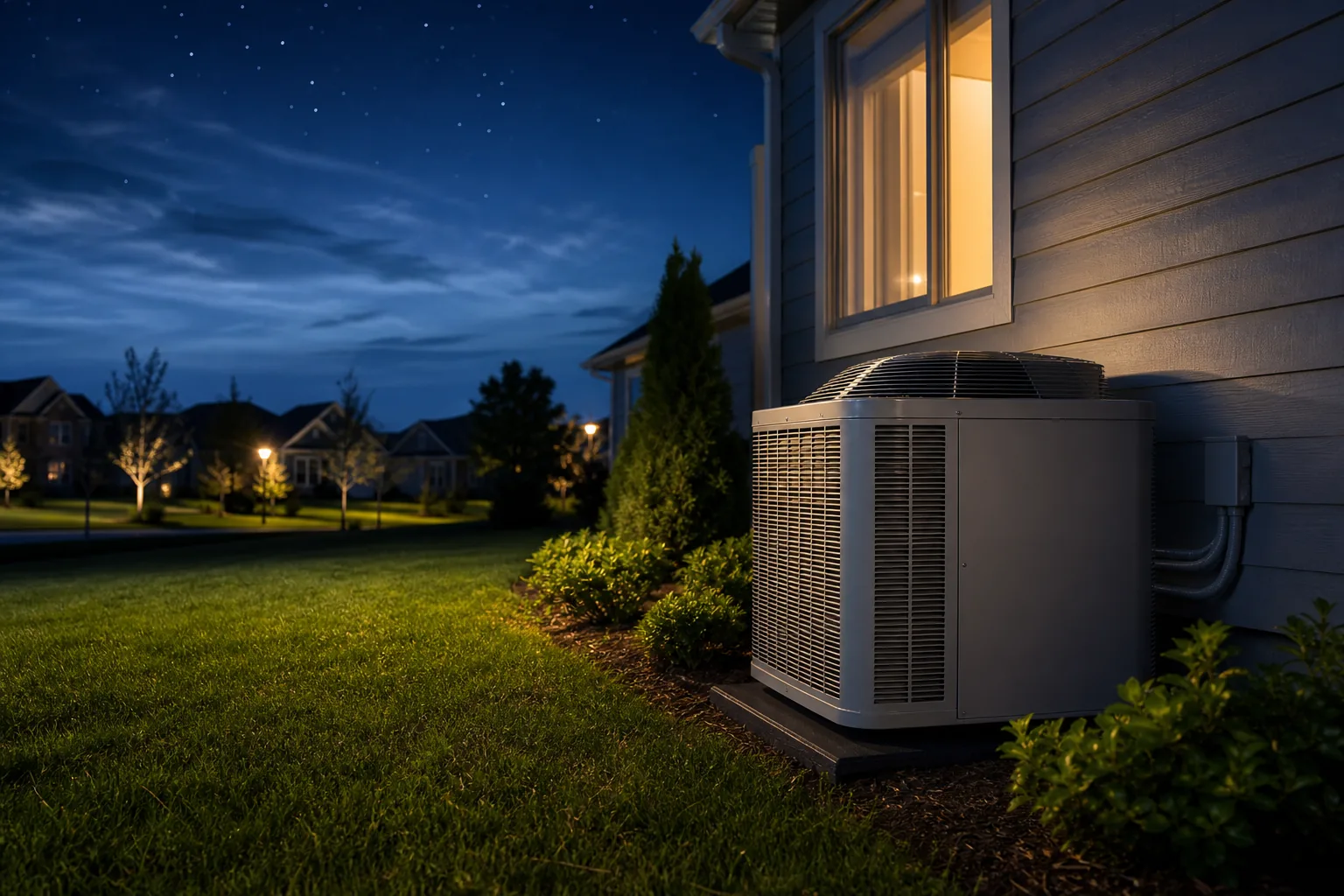
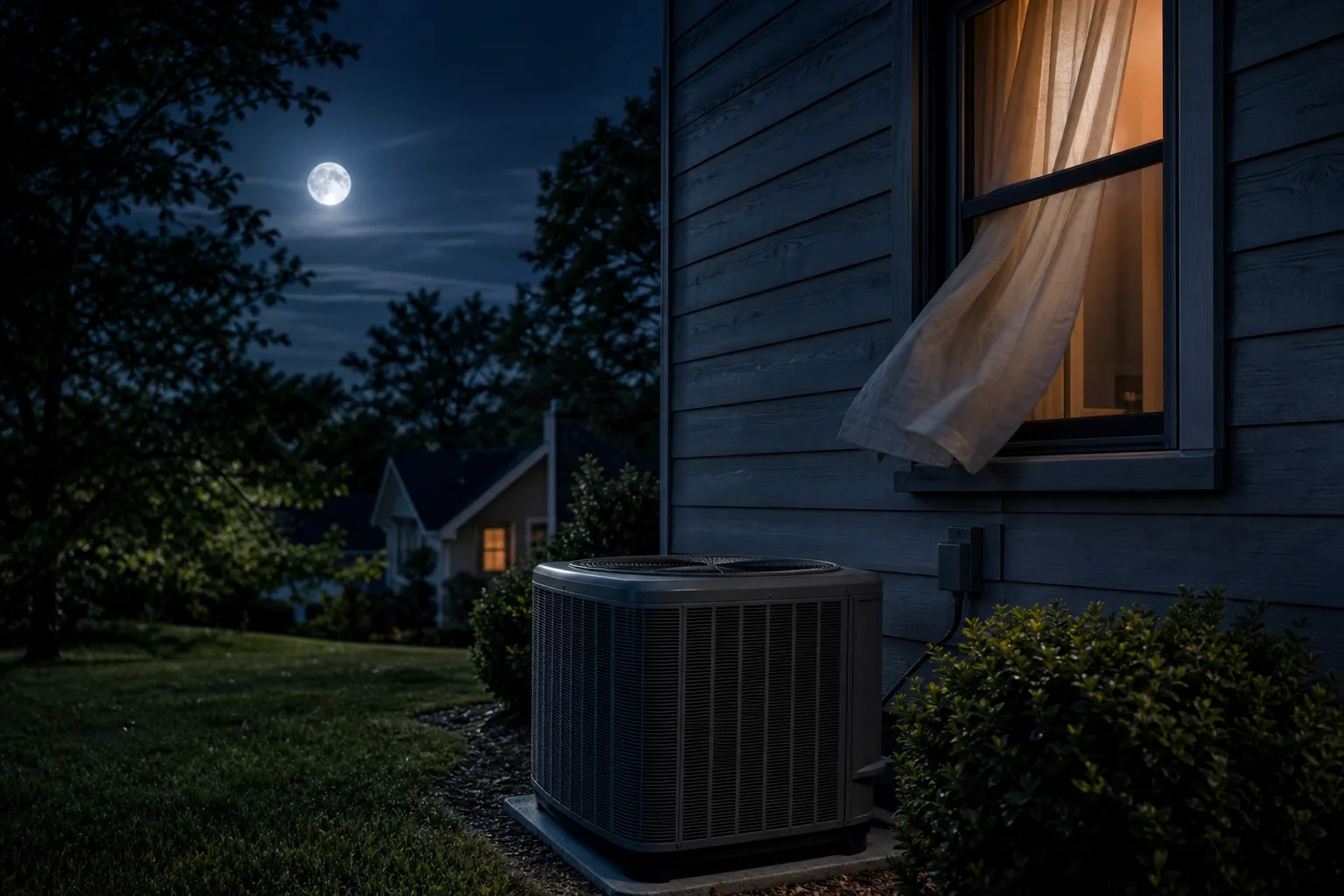
Opening a window for a short period after sunset can create a brief ventilation burst that helps flush out the heat that built up during the day, lowering indoor temperature. That extra breeze gives the AC a head start before it even turns on.
Jack Frost Heating & Air Conditioning knows how these natural swings affect performance. Our technicians often see lower energy bills on nights when the outdoor temperature stays below 70°F.
But the benefit only lasts while the night stays cool. A warm night or high humidity can erase the advantage, forcing the system to run longer.
How Temperature, Humidity, and Sun Exposure Affect Performance
During the day the sun heats the roof, walls and windows. Those surfaces store heat and radiate it back into the house, raising the indoor thermostat reading even after the sun sets.
When the sun is gone, the stored heat slowly leaks out. If your attic is well insulated, that heat loss happens gradually, keeping indoor temps comfortable without the AC working hard.
Humidity acts like a blanket. High moisture levels make the air feel warmer, so the thermostat calls for more cooling. At night, humidity usually falls, especially in the dry months of fall and spring. That drop lets the evaporator coil remove moisture more easily, which improves latent cooling.
Smart homes can take advantage of these patterns. By programming a smart thermostat to raise the set point a few degrees during the hottest part of the day and then drop it after sunset, you let the system rest while the house naturally cools. Jack Frost offers ENERGY STAR‑rated units that pair well with these programmable schedules.
One caveat: If your home has poor insulation or leaky ducts, the night‑time cooling effect can be lost to drafts and heat gain from the outside.
Thermostat Settings, Airflow, and Heat Pump Behavior After Dark
Thermostat placement matters. A thermostat tucked in a sun‑lit corner will see a higher temperature than the rest of the house, causing the system to run longer. Moving the sensor to a shaded wall or using a remote sensor gives a truer reading.
Many heat pumps switch to a “defrost” mode when outdoor temps dip near freezing. That mode temporarily runs the compressor in reverse, which can feel like a performance dip.
Airflow is another piece of the puzzle. Closed registers or a dirty filter choke the system, forcing the fan to work harder. A quick filter check after sunset can restore proper flow and let the unit run at its most efficient speed.
Smart thermostats let you set a “night‑time schedule” that lowers the cooling set point by 2‑3°F after 10 p.m. This small tweak can help reduce energy use over time. Jack Frost can help you program and fine‑tune that schedule for your home’s unique layout.
Be aware that a too‑low night set point can cause the system to short‑cycle, which wears out components faster.
When Better Nighttime Performance Points to an HVAC Problem
If your system runs great at night but struggles during the day, the issue is often airflow or heat gain rather than the unit itself. Common culprits include:
- Leaky ducts that let conditioned air escape.
- Dirty or clogged filters that restrict flow.
- Improperly sized equipment that can’t handle peak daytime loads.
Another sign is a noticeable temperature swing between rooms after sunset. That points to poor return‑air circulation, something we frequently address during a preventive maintenance visit.
Seasonal maintenance is key. A technician checks refrigerant charge, cleans the condenser coils and verifies the thermostat calibration. Regular service lets the system keep up with the night‑time advantage and stay reliable on hotter afternoons.
Jack Frost Heating & Air Conditioning offers a 15‑point preventive HVAC maintenance checklist that covers all of these bases. Our locals in Seymour and Knoxville trust us to spot hidden issues before they turn into costly repairs.
When you notice the day‑time lag, call a pro. Ignoring it can lead to higher energy bills and premature equipment failure.
FAQ
Why does my AC seem louder at night?
The AC can sound louder after dark because the outdoor temperature is lower, which allows the compressor to run at a higher speed to maintain the set temperature. If the noise seems excessive, check for debris around the unit or a loose fan blade.
Can I leave my windows open all night to help the AC?
Opening windows briefly after sunset can lower indoor temperature, but leaving them open all night may let warm, humid air back in if the temperature rises. A short ventilation burst is usually enough.
Do smart thermostats really save money?
Yes. Smart thermostats can cut cooling costs by 5‑10% by automatically adjusting set points for night‑time temperature drops and reducing run‑time during peak heat.
What temperature should I set my thermostat to at night?
A comfortable night setting is usually 2‑3°F higher than your daytime set point. Many homeowners aim for 78°F (26°C) when they’re sleeping.
My heat pump runs in defrost mode at night. Is that normal?
When outdoor temps near freezing, heat pumps enter defrost mode to melt frost on the outdoor coil. This temporary reversal is normal and protects efficiency.
How often should I have my HVAC serviced?
We recommend a preventive maintenance visit twice a year, once before the cooling season and once before heating. Regular checks keep the system ready to take advantage of night‑time cooling.
Conclusion
Night‑time cooling is a natural boost that can lower your bills and extend equipment life. Let Jack Frost Heating & Air Conditioning audit your system and set up a smart‑thermostat schedule so you get the most out of those cooler evenings.
Ready to put this into practice? Jack Frost Heating & Air Conditioning, Inc. was built for exactly this.