

A few leaves or a fast-growing shrub can make your outdoor AC work far too hard. When air can’t move around the condenser, cooling drops, energy use rises, and the system may shut off too soon.
We use a simple check at Jack Frost Heating & Air Conditioning, Inc. Start with at least 2 feet around low plants or structures. Give trees 5 feet above the unit. Then inspect the fan, coil, and indoor airflow.
Step 1: Check the Space Around the Unit
A clear space gives the condenser room to release heat. Walk around the unit and look for shrubs, fences, storage bins, toys, tall grass, or stacked items.
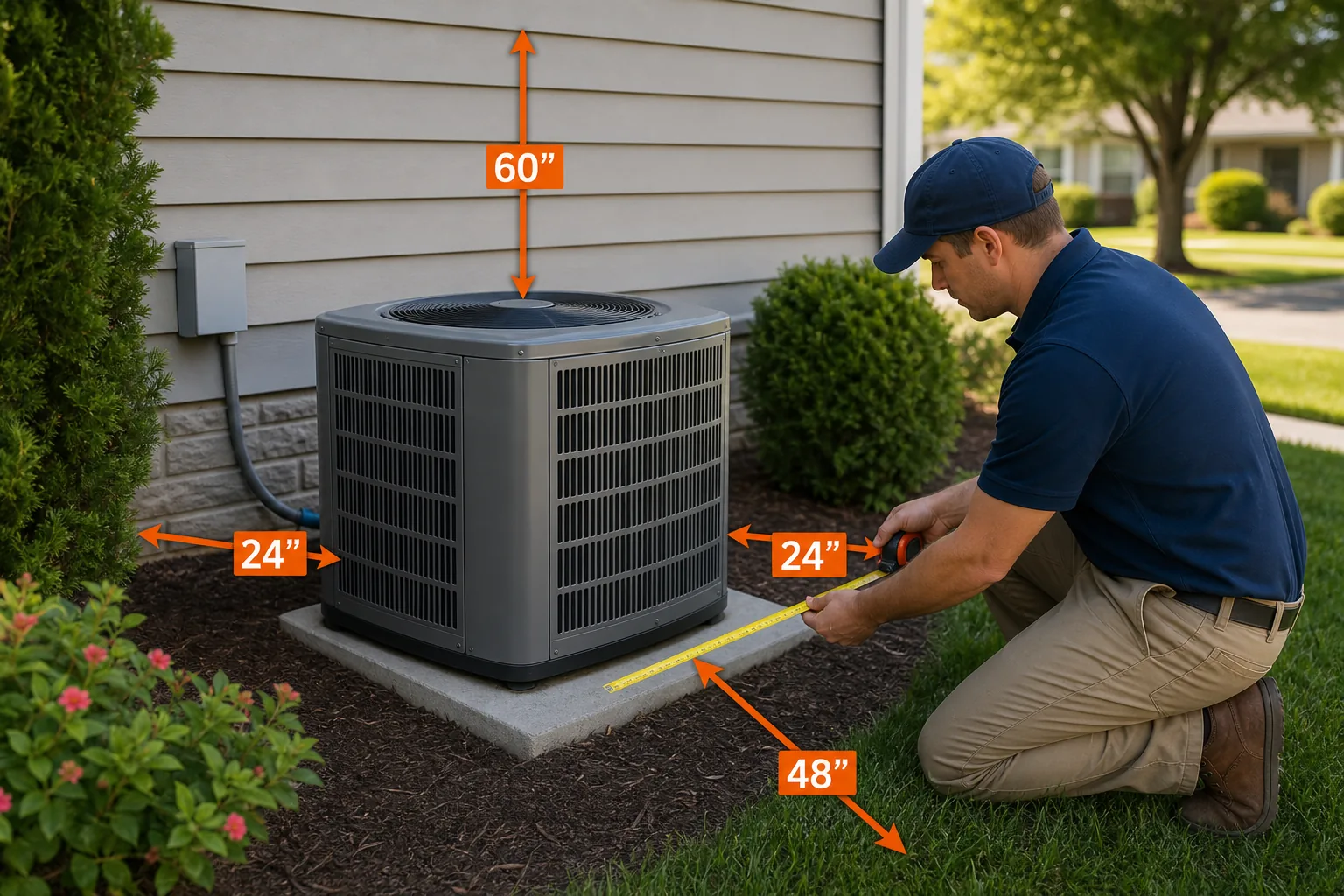
Keep at least 2 feet of clearance between the unit and low plants or structures. Three feet is recommended when possible. Keep trees at least 5 feet above the unit.
Measure with a tape. Don’t guess. If a fence sits too close, don’t remove it without checking property rules first.
Step 2: Remove Leaves and Loose Debris
Loose debris should leave the area before the AC runs. Turn the system off at the thermostat. If you plan to touch the unit, shut off power at the unit as well.
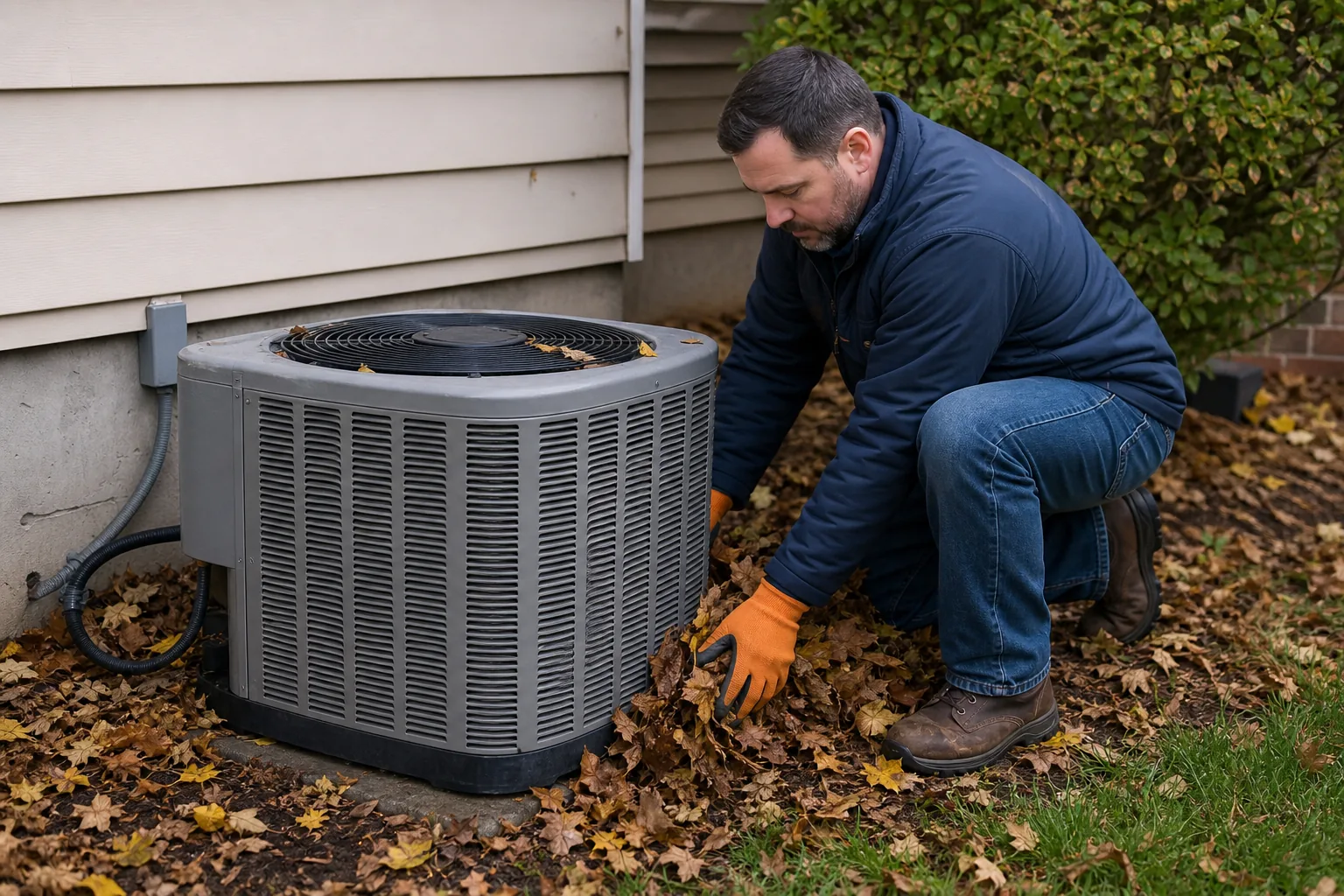
Pick up leaves by hand. Clear pine needles from the base. Remove grass clippings by hand. Never push debris into the coil fins, since bent fins reduce the path for air.
Wind can send branches or trash into the top fan guard. After storms, check the top and sides before cooling starts. This quick check can reveal debris before cooling starts; see related HVAC guidance.
Step 3: Trim Plants Before They Reach the Coil
Trim growth early, before it blocks the side panels. Cut back shrubs and vines so air can pass freely around the cabinet. Keep new growth outside the 2-foot minimum zone.
Use a suitable tool for small stems. Keep clippings away from the condenser. Do not apply lawn or garden products near the coil. Chemicals can harm metal parts and nearby plants.
For a planting plan, review landscaping around an HVAC unit to help keep shade and airflow in balance. Shade can help the yard feel cooler, but a dense wall of plants still blocks air.
Step 4: Clean the Outdoor Coil
A clean coil lets heat leave the refrigerant system. With power off, inspect the fins for dust, cottonwood, grass, or mud.
Use a garden hose with a gentle stream from the inside out when access allows. Spraying from the outside can drive dirt deeper. Keep the spray straight rather than using high-pressure equipment. High pressure can bend the fins.
Skip coil cleaner unless the product directions match your equipment and you know how to rinse it fully. If the coil is packed with dirt, let our trusted local HVAC experts handle the cleaning.
Step 5: Make Sure the Fan Can Run Freely
A free-spinning fan helps move hot air away from the condenser. With the power off, look through the top guard. Check for sticks, nests, loose plastic, or heavy dirt.
Don’t reach through the guard. Don’t test live voltage unless you’re trained and have the right meter. When cooling runs, the fan should start and keep running. A hum without movement can point to an electrical fault or failed motor.
A fan that stops can make the compressor overheat. Shut the system off and arrange service instead of repeatedly resetting it.
Step 6: Check Airflow Inside the Home
Indoor airflow problems can look like an outdoor condenser problem. Check the filter first. A dirty filter makes the blower work harder and can reduce air crossing the indoor coil.
Look for closed supply vents, blocked returns, or furniture pressed against grilles. In a rental or small office, check every return location. One hidden filter can restrict the whole system.
Low indoor airflow may freeze the evaporator coil. It can also lower system capacity and cause longer run times. Compare weak vents with other warning signs.
Step 7: Watch for Freeze-Up and Short Cycling
Early warning signs tell you when to stop a DIY check. Short cycling means the system starts, runs briefly, then shuts off. Ice on the refrigerant line or indoor coil is another warning.
Turn cooling off if you see ice. Set the thermostat to fan-only if the blower works, then let the ice melt. Don’t chip it away. That can damage the coil.
Poor airflow is one possible cause. Low refrigerant charge, a restriction, or a control fault can look similar. Refrigerant pressure checks require trained tools, so don’t add refrigerant based on ice alone.
Step 8: Protect the Unit Without Blocking Air
Protection should stop pests and debris without trapping heat. Keep stored items away from the condenser. Clear snow, leaves, and standing water from its base.
Don’t cover the unit while it runs. Any covering used during a long off-season must be removable before cooling starts. Never place a tight cover over the fan guard.
If airflow still seems weak after you clear the area, Jack Frost Heating & Air Conditioning, Inc. can check the condenser, blower, ductwork, and refrigerant system. We use transparent, honest pricing so you know what needs attention.
FAQ
How much space should I leave around my condenser?
Leave at least 2 feet around low plants or structures, with 3 feet preferred when space allows. Keep trees 5 feet above the unit. These measurements give the condenser room to move air. Always check the equipment manual too, since the maker’s instructions may require more space.
Can plants block airflow to an AC unit?
Yes, plants can block airflow when they grow close to the coil or fan area. Trim shrubs outside the clearance zone and remove leaves from the base. Don’t build a tight screen around the unit. The condenser needs open space on every side to release heat.
What happens when a condenser cannot get enough air?
Restricted outdoor airflow can make the system run longer and may cause overheating. You may notice weak cooling, higher power use, unusual noise, or short cycling. Indoor airflow problems can also freeze the coil. Since several faults share these signs, stop the system if ice appears and seek a proper diagnosis.
Can I wash my AC condenser with a garden hose?
Yes, a gentle garden hose can remove light dirt when the power is off. Spray from the inside outward if you can reach that side. Avoid forceful spraying because it can bend coil fins. If mud or packed debris remains, have Jack Frost Heating & Air Conditioning, Inc. clean it.
Should I cover my outdoor AC unit?
Only use a removable cover when the system is off for the season, and remove it before cooling begins. Never seal the running unit in a covering that restricts airflow. A tight cover can trap moisture or restrict airflow. Keep the area open year-round so leaves and pests don’t collect around the fan.
Keep the Air Path Open
Use the 2-foot plant clearance and 5-foot tree clearance as your starting point. Clear debris each season, then schedule service if the fan fails, ice forms, or short cycling continues. That small habit supports comfort that lasts.