

When East Tennessee reaches 95°F, your AC may run for most of every hour. That can be normal, especially near a 72°F set-point. Here are the main factors that show whether your system is working as expected or struggling.
1. Jack Frost Heating & Air Conditioning, Inc.
Professional testing helps restore comfort when long cooling cycles stop feeling normal. Jack Frost Heating & Air Conditioning, Inc. helps homeowners in Seymour, Knoxville, and nearby East Tennessee communities check airflow, system performance, humidity, and ductwork.

On a very hot day, almost continuous operation can be reasonable. We look closer when the indoor temperature keeps rising, rooms stay warm, or the system never reaches the thermostat setting. Our team can inspect the equipment instead of guessing from the runtime alone. For related warning signs, to why an AC runs all day during extreme heat.
We also check the basics first. A clogged filter, blocked return, dirty coil, weak blower, or poor duct seal can add hours of runtime. Transparent, honest pricing starts with finding the cause before suggesting a repair or replacement.
2. The 15–20°F Temperature Drop, A Better Test Than Clock-Watching
A 15 to 20°F indoor-to-outdoor difference is a more useful starting point than counting minutes. If it is 95°F outside, a properly working system may maintain roughly 75°F to 80°F indoors, depending on the home and equipment.

The temperature drop is measured across the indoor coil, not by comparing one random room with the weather app. A technician checks return-air temperature and supply-air temperature under load. Sun through a west-facing window or a warm attic can still make one room feel hotter.
That range is a guide, not a promise. A 72°F set-point asks more of the system than a 78°F set-point. If the house reaches 78°F but cannot reach 72°F during the afternoon, the load may be too high, airflow may be poor, or the equipment may need service.
Our page on how long it takes to cool a house explains why recovery time changes with heat, insulation, and system condition.
3. A 30%–50% Duty Cycle, The Normal Runtime Range to Watch
A 30%, 50% duty cycle can be a useful normal-range reference for a properly sized system on a typical hot day. In plain terms, the compressor may run for about 18 to 30 minutes of each hour. A 95°F afternoon can push runtime far higher.

On extreme heat, an AC that runs for most of the hour may be doing its job. Longer cycles remove more moisture and avoid the waste of repeated starts. The key question is whether the home stays near the set temperature.
| What you notice | What it may mean | What to do |
|---|---|---|
| Runs much of the hour, room reaches set-point | High outdoor heat and a normal heavy load | Keep filters clear and watch indoor comfort |
| Runs constantly, indoor temperature rises | Airflow, sizing, duct, refrigerant, or heat-load issue | Schedule a system check |
| Starts and stops every few minutes | Short-cycling from sizing or a control problem | Have the cause tested soon |
| Runs long, but the home feels sticky | Humidity removal or drainage problem | Ask for a humidity and condensate check |
Runtime by itself does not tell the whole story. Comfort, temperature drop, moisture level, and cycle pattern give a much clearer picture.
4. Proper System Sizing, The Difference Between Long Cycles and Short-Cycling
Correct sizing helps an AC cool steadily without running endlessly or shutting off too soon. An undersized unit may run almost nonstop during a 95°F afternoon because it cannot meet the home’s heat load.

An oversized unit has the opposite problem. It can reach the thermostat quickly, then shut off before it removes enough moisture. That short-cycling pattern can leave hot spots and a damp feel. Frequent starts also put more stress on the system.
Square footage alone cannot determine the right capacity. Window area, insulation, attic heat, air leakage, ductwork, and the home’s layout all affect the load. A proper load calculation gives better information than a rule based only on floor area.
If a replacement system is being considered, ask us to check sizing before choosing equipment. The right capacity supports comfort that lasts.
5. Clean Filters and Coils, The Airflow Basics That Prevent Excessive Runtime
Clean filters and coils help the system move air and transfer heat. A dirty filter restricts return airflow. A dirty outdoor coil makes it harder to release heat, so the system may run longer on a hot Tennessee day.

Start with the filter. Make sure it fits the slot and is not visibly packed with dust. Check the outdoor unit for leaves, grass, and debris, but keep hands away from moving parts and electrical components. Never bend the coil fins while cleaning around the cabinet.
Indoor coil cleaning is usually a service task. The coil sits inside the system and may be hard to reach without taking panels off. Our HVAC maintenance service page explains how planned checks can catch airflow and cooling issues before peak heat.
Do not install a filter that is too restrictive for your equipment. A higher rating is not automatically better if the blower cannot move enough air. Follow the filter size and replacement guidance for your system.
6. Humidity and Dehumidification, Why 78°F Can Still Feel Uncomfortable
Humidity can make 78°F feel warmer than the thermostat suggests. The AC removes moisture while it cools, but a system that cycles off too soon may not run long enough to dry the indoor air.

That is one reason a properly sized system matters. A unit that is too large may cool the room fast and leave before enough moisture reaches the drain pan. A system that runs steadily has more time to remove moisture.
Watch for a sticky feeling, musty smells, condensation, or a drain pan that fills often. These signs do not prove one specific fault, but they justify a closer look. High humidity also adds work because the system must handle both heat and moisture.
We check the condensate path along with airflow. A blocked drain can cause water trouble even when the AC still seems to cool.
7. Thermostat Fan Auto Mode, Better Moisture Control Than Continuous On
Fan Auto mode usually keeps the blower tied to a cooling call, which can help the system finish its moisture-removal cycle. In On mode, the blower keeps moving air after the compressor stops.

Continuous fan operation can help mix temperatures in a two-story home. It may also move air through a filter more often. But it can blow moisture left on the indoor coil back into the home after a cooling cycle ends. That can make a humid room feel sticky.
Try Auto first during a muggy stretch. If an upstairs room stays warm, a technician should check duct balance and return airflow instead of relying only on the fan switch.
Smart controls can help with schedules, but avoid extreme setbacks. Raising the indoor temperature several degrees during the hottest part of the day may leave the system working hard when you return. Comfort should guide the setting, not a race to reach the lowest electric bill.
8. Duct Sealing and Attic Insulation, Stopping Cooled Air Loss
Sealed ducts help cooled air reach the rooms that need it. Leaks in an attic or crawlspace can send treated air into unwanted spaces before it reaches a bedroom or living room.
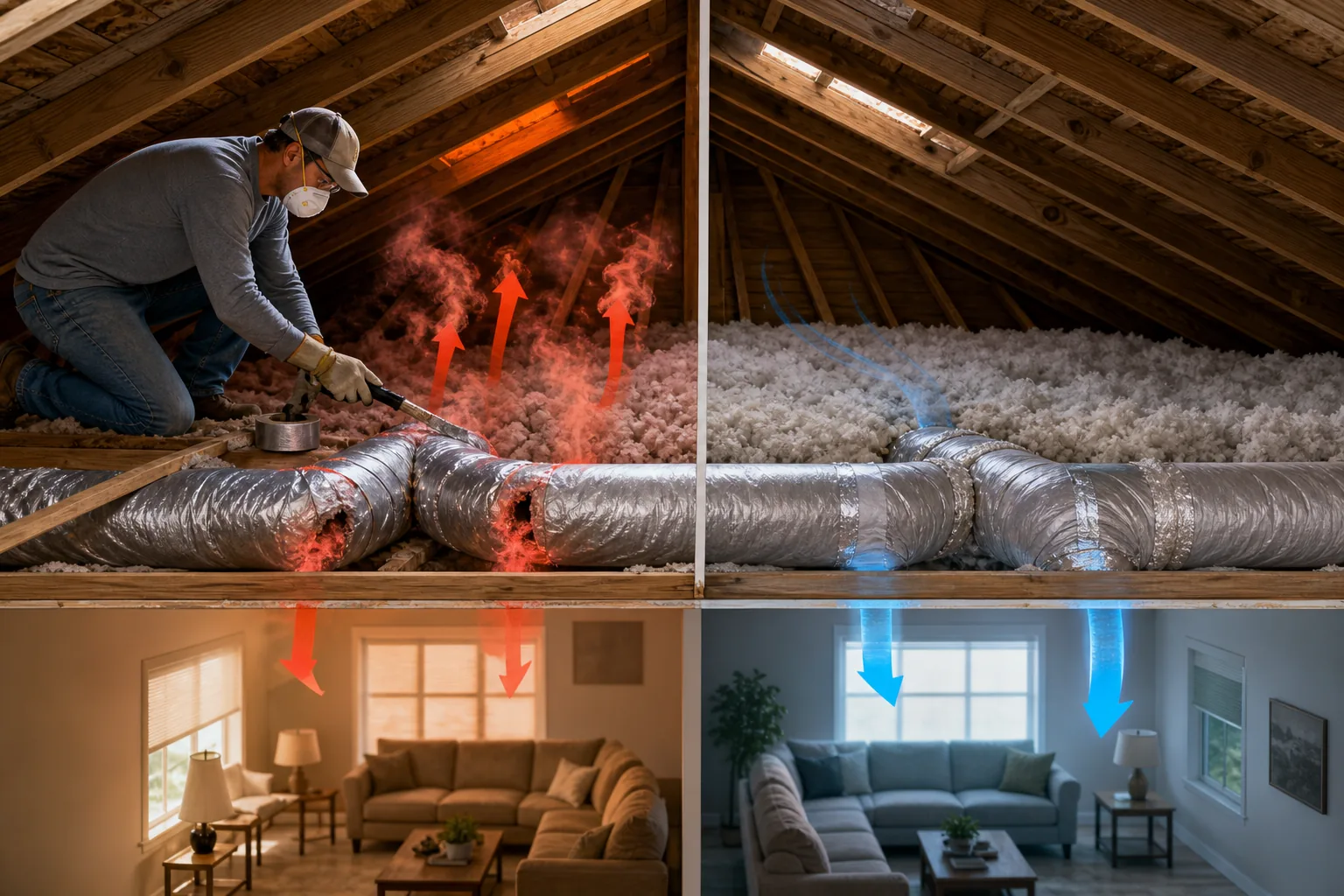
Poor insulation adds another problem. A duct crossing a hot attic gains heat while the AC is trying to deliver cool air. The system then runs longer, yet the far rooms may still feel warm.
Look for uneven temperatures, weak airflow at distant vents, dusty streaks near duct joints, or rooms that never match the thermostat. These clues point toward an airflow inspection rather than a thermostat adjustment.
Attic insulation and air sealing can also slow heat transfer through the building shell. We can help separate a duct problem from an insulation problem, since the fixes are different.
9. Refrigerant Charge and Heat Rejection, When Cooling Performance Changes
A correct refrigerant charge helps the system move heat out of the home. If the charge is low because of a leak, cooling capacity may fall and runtime may climb. An overcharge can also hurt performance instead of adding cooling.
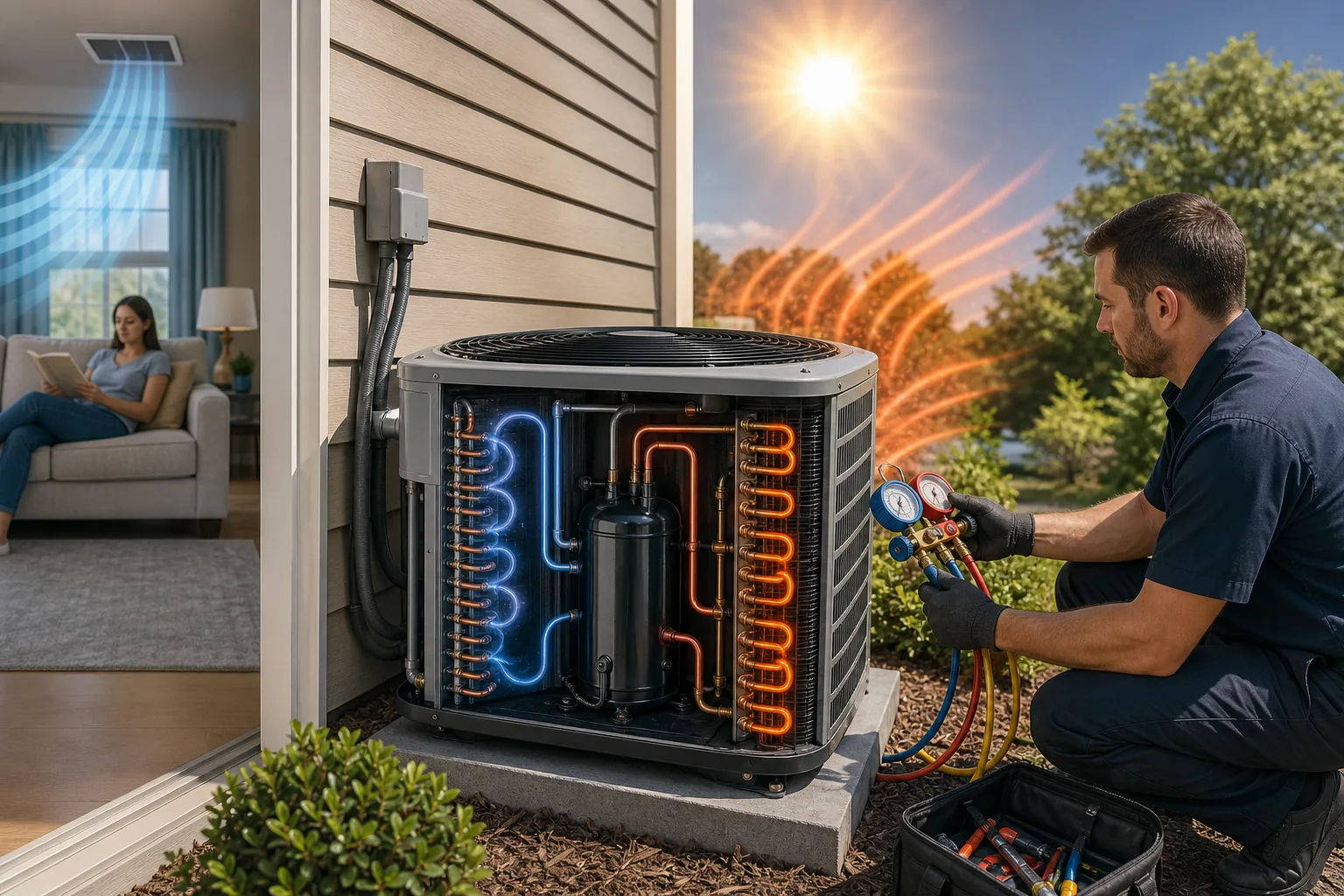
Homeowners should not add refrigerant from a can. Charge must be checked against the equipment, outdoor conditions, airflow, and measured system pressures. Ice on the indoor coil does not always mean low refrigerant. Restricted airflow can cause a similar symptom.
The outdoor coil must also reject heat. Dirt, blocked clearance, or a fan problem can raise operating pressure on a 95°F afternoon. Keep plants and stored items away from the cabinet so air can move freely.
Newer equipment may use refrigerants such as R-454B or R-32. The correct choice depends on the system design. We identify the refrigerant and test the system before discussing repair options.
10. Shade, Windows, Appliances, and Night Cooling, Reducing the Daytime Load
Reducing heat inside the home gives the AC less work to do. Close blinds on sunny windows, especially on the west side, where late-day sun can push room temperatures up fast.
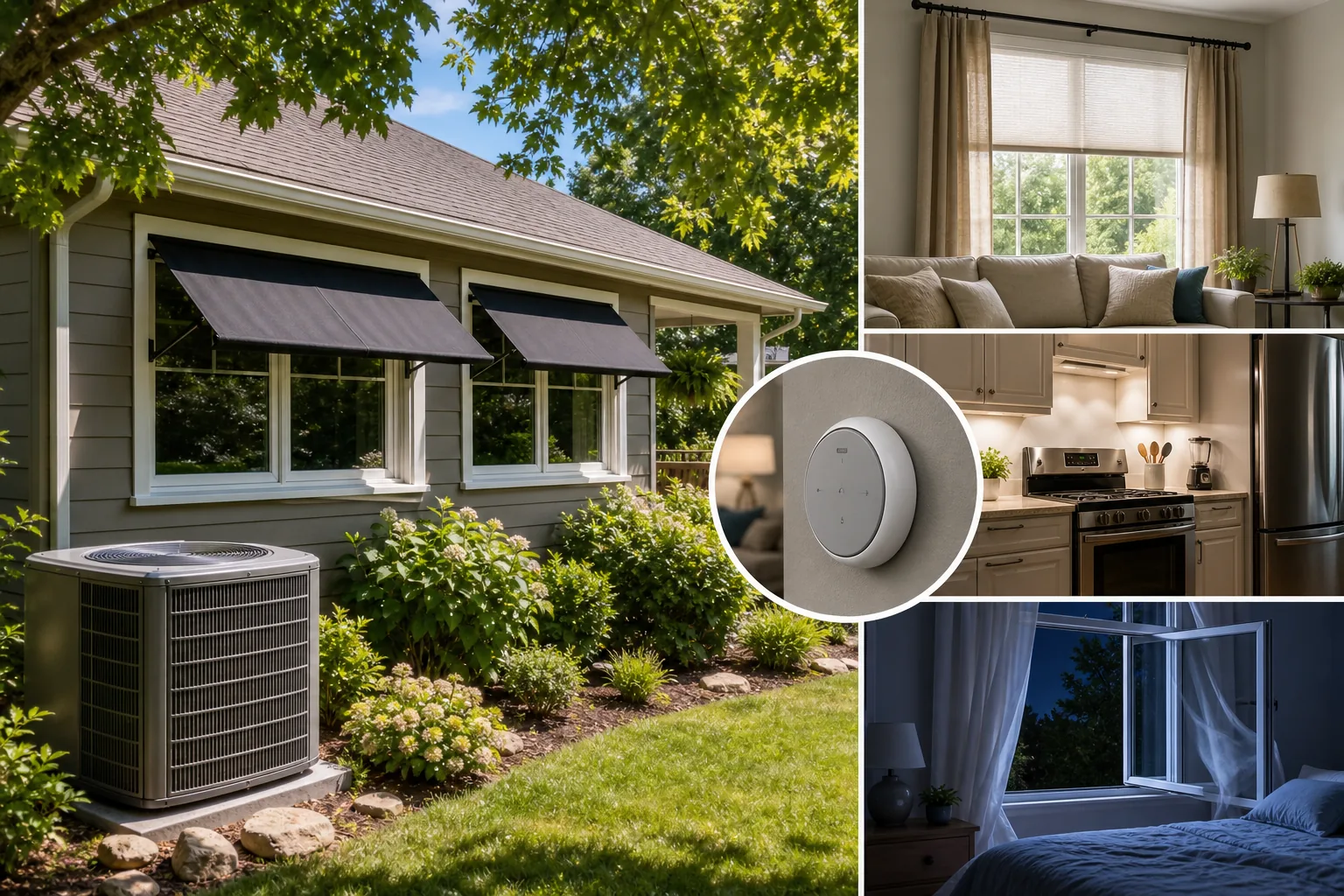
Run heat-producing appliances at night when possible. An oven can add a large burst of heat to the kitchen. A ceiling fan can make people feel cooler through airflow without lowering the thermostat.
Night cooling can help when outdoor air becomes cooler. Pre-cooling the home after sunset may reduce the next afternoon’s load, but leave windows closed once outdoor heat and humidity rise.
Shade the outdoor unit without blocking its airflow. A tree or planned shade can help, but dense plants pressed against the cabinet can trap hot air. Our article on window coverings that reduce cooling costs covers a simple way to limit solar heat gain.
For a rough running-cost check, the calculation depends on power input, hours of use, and the local electric rate. A clear air-conditioner running-cost guide uses those same inputs, though local rates and equipment details differ.
FAQ
How long should an AC run on a 95°F day?
An AC may run for most of each hour on a 95°F day, especially when set near 72°F. Continuous operation can be normal if the home reaches the set temperature and the air feels comfortable. If the indoor temperature keeps climbing, check airflow, sizing, duct losses, outdoor heat rejection, and refrigerant performance.
Is it normal for my AC to run all day in Tennessee?
It can be normal for an AC to run nearly all day during extreme Tennessee heat. Long cycles are less concerning when the home stays near the set-point. Constant operation with rising indoor temperatures is different. That pattern suggests the system may not be keeping up or may have a mechanical or airflow issue.
What temperature should I set my AC at in summer?
The best summer setting is the highest temperature that still feels comfortable. Many homes use a setting near 78°F for efficiency, while some people prefer the low to mid-70s. Humidity changes how the room feels, so improving moisture control may help more than lowering the thermostat.
Why does my AC run but never reach the thermostat setting?
An AC that runs without reaching its setting may have restricted airflow, dirty coils, leaky ducts, poor insulation, incorrect sizing, or a refrigerant problem. Check the filter and thermostat location first. If the indoor temperature still rises during moderate hours, arrange a professional inspection.
Should my AC fan be on or auto?
Auto is usually the better first choice for moisture control because the blower stops with the cooling cycle. On can help mix air between floors, but it may move damp air off the indoor coil after cooling stops. If rooms stay uneven, inspect duct balance before running the fan nonstop.
Conclusion
On a 95°F Tennessee day, expect long cycles and possibly near-continuous operation when the thermostat is set around 72°F. Focus on the indoor temperature, humidity, airflow, and cycle pattern rather than the clock alone. If your home keeps warming or feels damp, Jack Frost Heating & Air Conditioning, Inc. can test the system and help you choose the next sensible step.