

Yes, well-placed trees can lower the heat reaching your home and reduce the work your air conditioner must do. Shade, plant transpiration, and better airflow can also make your yard feel cooler. We’ll show you how to plan the work safely in East Tennessee, where summer sun can push cooling systems hard.
Step 1: Check Where the Sun Hits
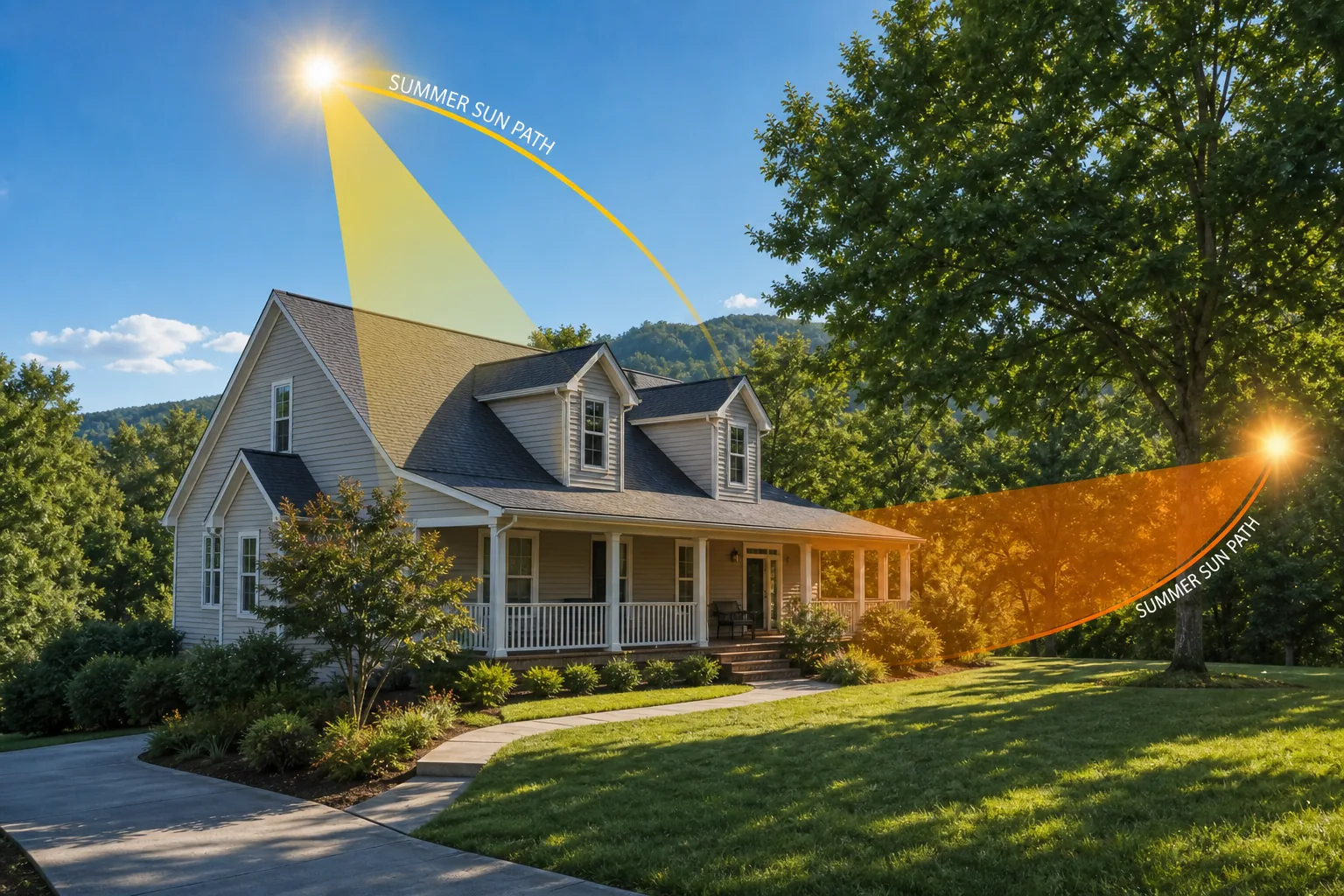
Start with the hottest parts of your home, because shade works best when it blocks direct afternoon sun. Walk around your house on a warm day and note which walls, windows, and roof areas feel hottest.
South and west-facing sides often receive strong summer sun. West-facing windows can be especially tough because afternoon heat arrives after the home has warmed all day. Mark those spots before you choose a tree or trellis.
Shade keeps sunlight from heating siding, glass, and roofing. That cuts the heat moving indoors, so your air conditioner may run for shorter periods.
We at Jack Frost Heating & Air Conditioning, Inc. also suggest checking your thermostat location. Sunlight can warm the thermostat and make it call for cooling longer than needed. Our guide to how sunlight affects thermostat readings explains that problem.
Step 2: Choose Deciduous or Evergreen Trees
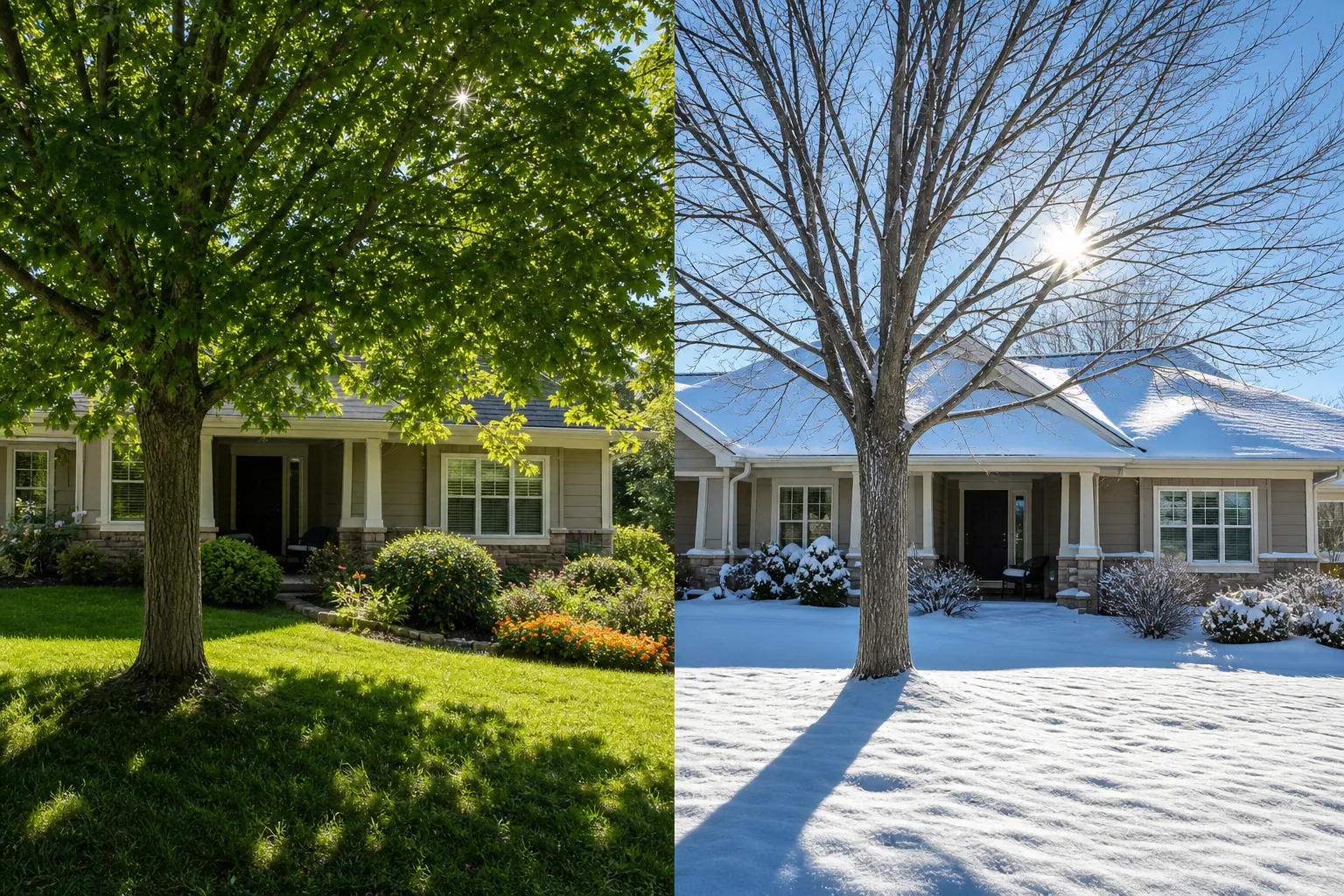
The right tree can cool your home in summer while supporting comfort in winter. Deciduous trees lose their leaves in colder months, so they provide summer shade while allowing winter sunlight through.
That makes deciduous trees useful near south-facing walls and windows. Evergreens keep their needles or leaves year-round. They work better as windbreaks on the side of the home that faces cold winter winds.
In much of East Tennessee, that may mean placing evergreens toward the north or northwest side. Your lot may differ, so watch the wind before planting. A fence, nearby building, or slope can change the wind pattern around your home.
Choose a tree that fits its mature size. A small nursery tree may look harmless today, but its roots and branches need room later. Native or locally suited trees usually have a better chance of handling the site.
Planting can also change the small climate around your patio. Shade and moisture from leaves may make outdoor areas more pleasant, even before the canopy reaches the house.
Step 3: Set a Safe Distance From the House
Good spacing protects your home while giving the canopy room to grow. Small trees may fit about 15 feet from the house, while large trees often need at least 20 feet, based on their mature spread and root system.
Do not measure only from the trunk you see at planting time. Check the expected canopy width, root habits, overhead wires, septic areas, driveways, and buried utility lines.
Before digging, contact 811 to locate underground utilities. A tree that shades your wall but damages a water line is a poor trade. Keep roots away from foundations and pipes whenever possible.
For a fast shade effect near a wall or patio, consider a sturdy trellis with a climate-suited vine. It can provide cover sooner than a shade tree, but it still needs support and regular trimming.
A professional tree service may be useful when a mature tree threatens a roof or utility line. Specialized planning can help when trees are close to homes. The same safety mindset applies before planting.
Step 4: Protect the Outdoor AC Unit
Shade can help an outdoor condenser, but plants must not block its airflow. The unit releases heat while it runs. Dense growth pressed against it can trap that heat and make cooling harder.
Leave open space around the condenser. Keep leaves, vines, mulch, and grass from building up near the coil. A small tree or tall shrub can shade the unit from a safe distance, but it should never form a tight wall around it.
Trim branches before they hang over the equipment. Falling twigs can bend fins or block the coil. Roots also need room, especially if the condenser sits near a foundation or service path.
We explain more about placement in our guide to landscaping around your AC unit. The goal is simple: shade the equipment without making service access harder.
Step 5: Use Trellises and Vines for Quick Shade
Trellises can add shade before a young tree has a wide canopy. Place one near a patio, sunny window, or wall that absorbs afternoon heat.
Fast-growing vines can cover the frame and create a shaded corridor. Leaves also release water vapor through transpiration, which can cool nearby air. Plants release water vapor through tiny openings in their leaves.
Do not attach a trellis directly to siding unless the design allows airflow and safe maintenance. Keep vines away from gutters, roof edges, windows, and electrical equipment. Some vines become heavy as they mature.
Think of a trellis as a targeted fix. It can help one hot wall or sitting area, while trees provide wider shade over time.
Step 6: Build a Windbreak for Winter
Trees can help with winter heating costs when they slow cold wind before it reaches the house. Evergreen trees and shrubs often work well on the windward side.
Windbreaks need spacing. Planting trees too close together can create a dense row that competes for water and becomes harder to maintain. A row placed several tree heights away may protect a wider area than trees pressed against the wall.
Watch how wind moves across your lot during cold weather. The best location depends on your home’s shape, nearby buildings, and local exposure. Do not block a needed breeze in summer.
For a heat pump home, keep outdoor airflow clear around the equipment in every season. A windbreak should protect the house without trapping debris around the unit.
Step 7: Maintain the Landscape
Healthy trees provide better shade and fewer risks. Inspect branches after strong storms, especially when trees sit near the roof, driveway, or condenser.
Prune growth that touches siding or blocks service access. Remove dead limbs before they fall. Keep leaves out of gutters and away from outdoor coils.
Water new trees according to local conditions and the tree’s needs. A stressed tree may grow poorly, while an overwatered area can create root trouble. Watch for leaning trunks, exposed roots, cracked branches, and signs of disease.
Tree shade takes time. Keep using sensible HVAC habits while the canopy grows. Our page on keeping airflow clear around your condenser covers the small maintenance checks that protect cooling performance.
Step 8: Measure the Result
Track changes instead of guessing. Compare electricity use during similar weather periods before and after new shade develops. Your bill also depends on thermostat settings, humidity, insulation, duct leakage, and equipment condition.
Check indoor comfort in rooms near the shaded wall. Notice whether the system reaches its set temperature more easily during hot afternoons. You can also compare surface conditions from a safe distance, but do not touch electrical equipment or open HVAC panels.
Some sources cite possible cooling savings in the 15% to 50% range, but results vary widely by climate, tree placement, home design, and equipment. Treat those figures as broad estimates, not a promise for your house.
If your bill stays high after landscaping changes, the cause may be airflow loss, dirty coils, duct problems, or an aging system. Jack Frost Heating & Air Conditioning, Inc. can help East Tennessee homeowners check the HVAC side of the problem with transparent, honest pricing.
Frequently Asked Questions
Can trees around your home lower your cooling bill?
Yes, trees can lower cooling costs by shading walls, windows, and roof areas that absorb summer heat. Leaves also release water vapor, which can cool nearby air. Savings depend on placement, tree size, weather, insulation, and HVAC condition. A tree planted too far away may provide little shade, while one planted too close can create maintenance risks.
Where should I plant trees to cool my house?
Plant shade trees where they block the strongest sunlight, often along the south and west sides of a home. Keep large trees at least 20 feet away when their mature size requires that space. Check roots, overhead wires, utility lines, and the tree’s full canopy before digging.
Do trees make an air conditioner work better?
Trees can help an air conditioner by shading the home and reducing heat gain. A nearby tree may also shade an outdoor condenser, but plants must not block the unit’s airflow. Leave room for air movement and service access. Trim leaves and branches before they reach the coil or fan area.
Are deciduous or evergreen trees better for energy savings?
Deciduous trees are often better near sunny walls because they shade the home in summer and let winter sun through after losing their leaves. Evergreens can help block cold winter winds. The best choice depends on your yard, mature tree size, local weather, and the direction of summer sun.
How long does it take for tree shade to lower cooling costs?
Tree shade usually takes time because young trees have small canopies. A trellis with a suitable vine can provide targeted shade sooner, while a tree gives broader coverage as it grows. Use careful planting and HVAC maintenance during the wait. Never choose a fast-growing tree without checking its mature roots and branches.
Plant for the sun you have, leave room for mature growth, and keep your condenser clear. If cooling costs remain high, ask Jack Frost Heating & Air Conditioning, Inc. to check whether your HVAC system is wasting energy. That combination gives your home comfort that lasts.