

Sunlight can trick your thermostat into reading a room as much as 25 °F warmer than it actually is. This hidden error can make your HVAC system run longer, raise energy costs, and create uneven comfort throughout your home. In the sections below, we explain what a thermostat measures, why direct sun can distort its sensor, and how proper placement and professional HVAC service can help correct the problem.
What Your Thermostat Actually Measures
A thermostat is a tiny computer that watches the air temperature right where it sits. It uses a temperature sensor , a component that responds to heat , to turn a temperature number into a signal for the furnace or cooling equipment. The device doesnotknow how the rest of the house feels; it only reacts to the air that brushes past its casing.
When the sensor reads higher than the room’s average, the system thinks the space is too warm and keeps cooling. When it reads lower, the heat runs longer. That simple feedback loop means any local heat source , a sunny wall, a lamp, a kitchen stove , can throw off the whole house’s comfort.
Most modern thermostats aim for an average room temperature of about 72 °F in summer. The sensor’s placement is critical because the reading drives the entire HVAC cycle. If the sensor is in a sun‑lit spot, the reading can jump 5‑7 °F on a typical summer day and spike up to 25 °F in extreme cases.
For a deeper look at why placement matters, see How Your Thermostat Location Affects Energy Efficiency. That page explains how even a few feet of difference can change the sensor’s view of the air.
Bottom line: the thermostat measures the temperature of the air that touches its own case, not the whole home.
How Direct Sunlight Creates False Temperature Readings
Sunlight carries radiant energy that heats solid objects more quickly than the air around them. When the sun’s rays strike the plastic housing of a thermostat, the housing warms up faster than the room air. The temperature-sensing component inside that housing then reports the higher surface temperature instead of the ambient air temperature.
This phenomenon is called a “ghost reading.” The thermostat thinks the house is hotter, so the cooling system runs longer to chase a temperature that’s already been reached. The result is unnecessary compressor wear, higher electric usage, and a chilly living space.
Thermostats should be kept out of direct sun, near drafty windows, or close to exterior doors because of these localized distortions. Radiant heat can affect a temperature reading.
In practice, homeowners notice a pattern: the AC hums nonstop in the early afternoon, then finally rests once the sun moves away. That timing clue often points straight to a sun-baked sensor.
And the effect isn’t limited to the hottest days. Even reflected heat off bright walls can push a reading up 3-7°F, enough to trigger an extra cooling cycle.
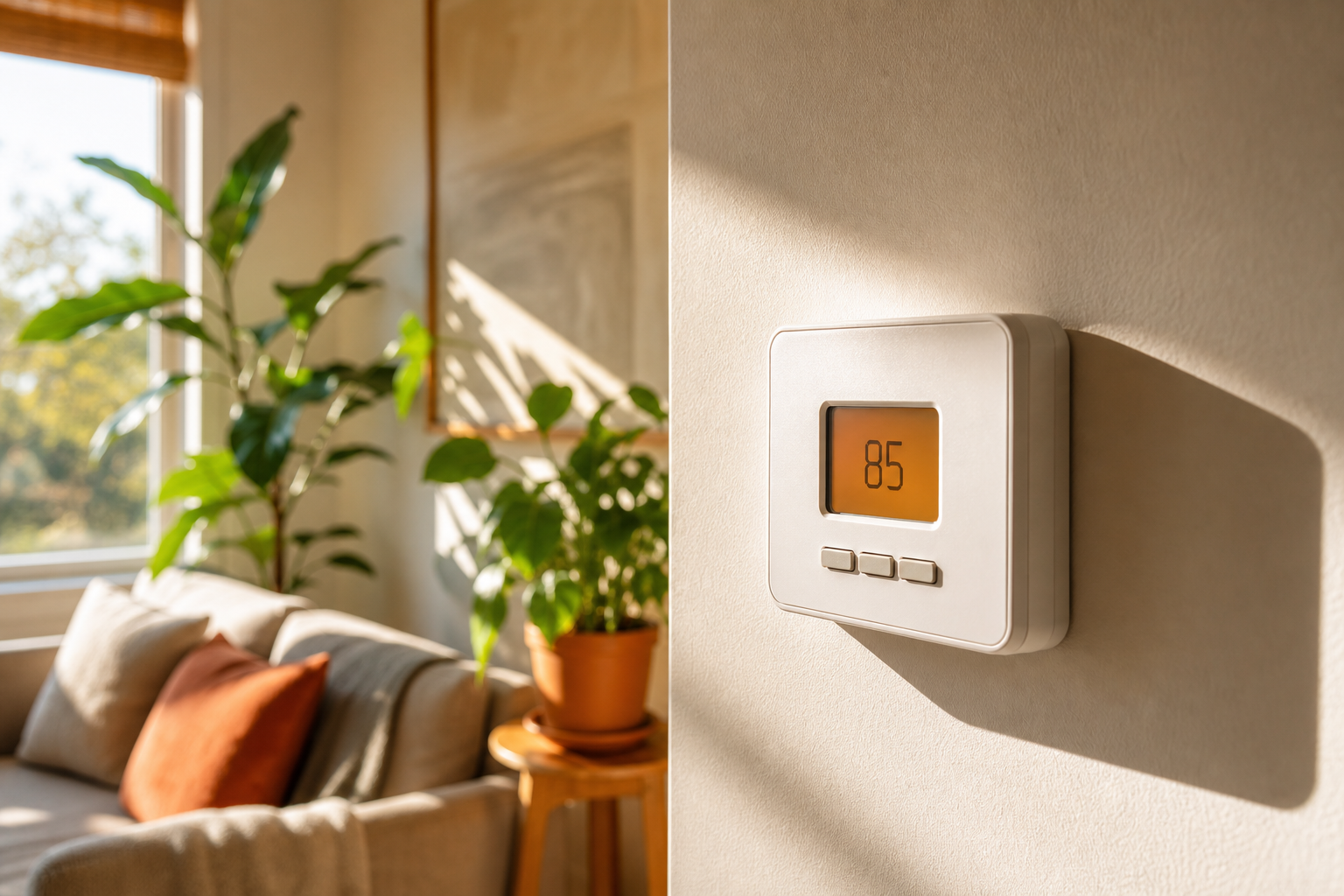
Bottom line: direct sun heats the thermostat’s case, causing the sensor to over-report temperature.
Why Sunlight Can Affect Cooling, Heating, and Heat Pump Cycles
Whether your home runs a cooling system, a furnace, or a heat pump, the thermostat’s signal tells the system when to start and stop. A false high reading in summer makes the cooling system run longer; a false low reading in winter makes the heat stay on longer. In both cases, the equipment cycles more often than needed.
Continuous operation stresses key components. The blower motor runs hotter, the compressor’s internal pressure builds up, and electrical contacts stay engaged, all of which shorten the lifespan of the unit. Prolonged compressor run‑time can contribute to increased wear on motor bearings. Related information
Heat pumps suffer a similar issue. They rely on a reversal valve that switches between heating and cooling. When the thermostat falsely calls for cooling in the middle of a winter night, the valve flips unnecessarily, adding wear and reducing overall efficiency.
Because the thermostat controls the whole system, a single mis‑read can cause the entire house to run hotter or colder than intended. That’s why even a modest 5 °F offset can raise your energy usage by 10‑15 % during peak months.
Jack Frost Heating & Air Conditioning, Inc.’s high-efficiency equipment helps offset that extra load. Efficient compressors and variable-speed fans use less power to correct a temperature swing, keeping bills lower even when the sensor misbehaves.
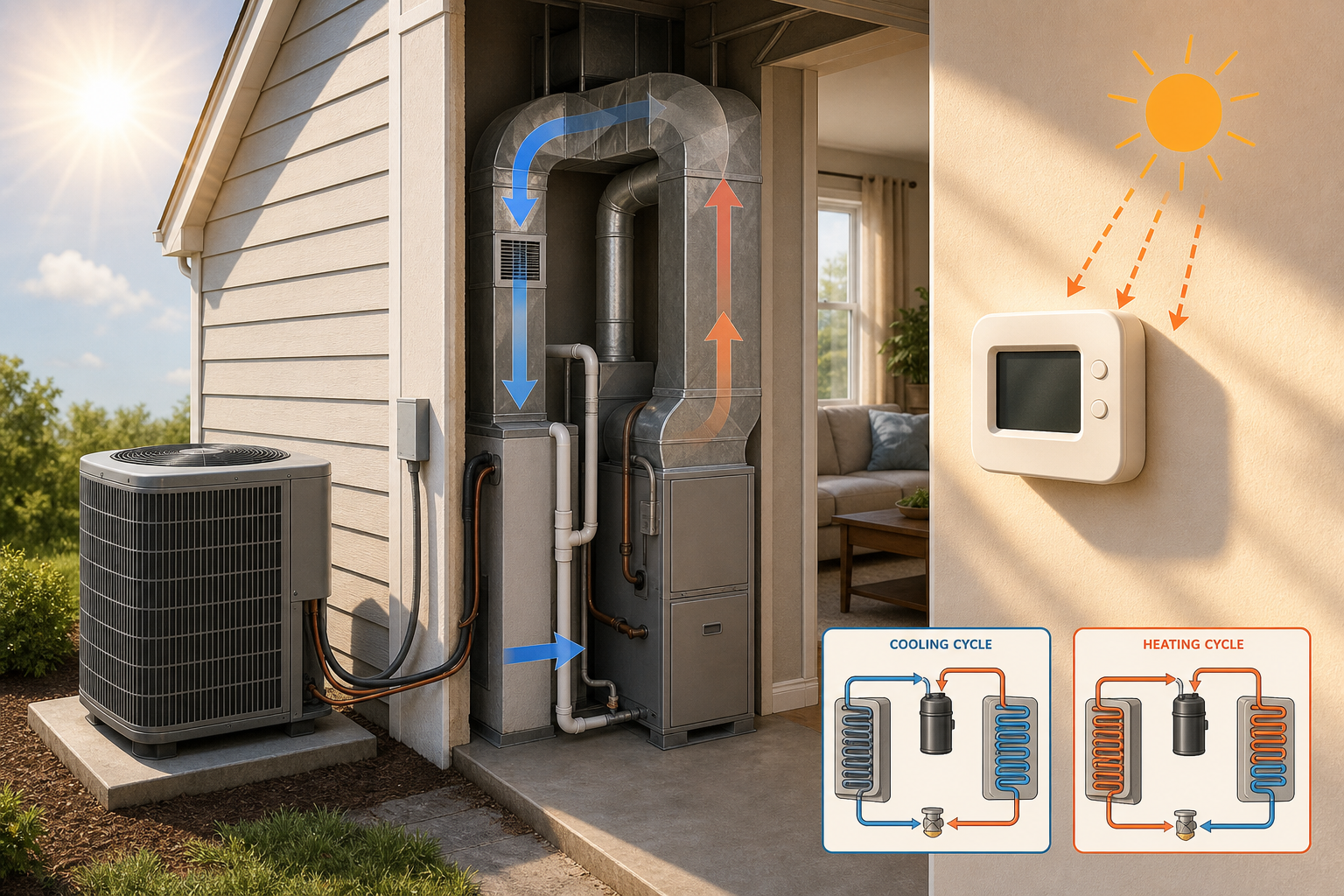
Bottom line: inaccurate readings disrupt the timing of every HVAC cycle, leading to waste and wear.
Thermostat Placement Problems That Make Sunlight Effects Worse
Even a well‑designed thermostat can be sabotaged by a poor mount spot. The worst offenders are south‑facing walls with large windows, skylights, or glass doors that let afternoon sun pour in.
Guidelines from the industry suggest mounting the thermostat on an interior wall, at least 150 cm (about five feet) away from any exterior glass. The height should be roughly 1.3‑1.4 m (about 4‑5 feet) above the floor, which places the sensor in the room’s breathing zone.
Other placement pitfalls include:
- Near heat‑producing appliances like ovens, fireplaces, or lamps.
- Above or below supply vents that push warm or cool air directly onto the sensor.
- On exterior walls that get direct sun or drafts.
- On doors that open to the outdoors, exposing the sensor to outside temperature swings.
These spots create micro‑climates that differ from the rest of the living area. The thermostat ends up “seeing” a temperature that never represents what most occupants feel.
Our technicians often start with a quick visual audit, checking the wall’s exposure to sun at different times of day. If the unit is too close to a window, we recommend either moving it or adding a solar shield , a small, reflective cover that blocks direct rays without hiding the display.
For more on how drastic temperature swings can affect your system, see How Drastic Temperature Swings Can Affect Your HVAC System. That page walks through how heat buildup in a room can force the AC to work overtime.
Bottom line: proper placement removes the sun’s “ghost” influence and lets the thermostat report true room temperature.
When a Sunlight‑Related Reading Needs Professional HVAC Attention
Most homeowners can test a sun‑exposed sensor with a basic temperature-measuring device. If the thermostat reads 5 °F or more higher than the temperature-measuring device during peak sun, it’s time to act.
Call a professional when any of these signs appear:
- The AC runs nonstop for hours even though the room feels cool.
- The furnace cycles on and off rapidly (short‑cycling) after the sun sets.
- Energy bills spike without a change in usage patterns.
- You notice frost on the AC’s evaporator coil during summer , a sign of over‑cooling.
Jack Frost Heating & Air Conditioning, Inc. can evaluate the thermostat’s location, check wiring, and suggest solutions such as alternative temperature-monitoring approaches or system adjustments. Our team also inspects the HVAC system for any collateral wear caused by the extra cycles.
In some cases, the thermostat itself may need recalibration or replacement. Modern smart thermostats can be paired with additional temperature-monitoring devices that sit away from sun‑lit walls, feeding a more accurate average temperature back to the main unit.
For tips on avoiding low‑setting damage, see Why Setting Your Thermostat Too Low Can Hurt Your HVAC System. Keeping the set point moderate reduces strain on both heating and cooling equipment.
Bottom line: when a sun‑induced mis‑read persists despite simple fixes, bring in a trusted local HVAC pro.
Frequently Asked Questions About Sunlight and Thermostat Readings
Does direct sunlight really make my thermostat read higher?
Yes. Sunlight heats the thermostat’s plastic case, causing the sensor to register a temperature that can be 5‑7 °F higher than the surrounding air, and in extreme cases up to 25 °F.
Can I fix the problem myself?
You can try shading the thermostat with blinds or a solar shield, and you can compare its reading to another temperature reading. If the gap stays large, relocation or professional help is recommended.
How far should a thermostat be from a window?
Industry guidelines suggest at least 150 cm (about five feet) horizontally from any exterior window and mounting on an interior wall.
Will a smart thermostat solve sun exposure issues?
Smart thermostats still rely on accurate sensor data. If the main sensor sits in sun, the smart features can’t correct the false reading. Adding an additional temperature sensor or moving the unit is necessary.
Does sunlight affect heating as well as cooling?
Yes. In winter, a sun‑warmed sensor can think the house is already warm, causing the furnace to turn off early, leaving rooms colder than desired.
We recommend checking your thermostat’s location this weekend. If you spot sun exposure, either add shading or call Jack Frost Heating & Air Conditioning for a professional relocation and system tune‑up.