
Wondering what your AC actually does when you flip the thermostat? In the next few minutes it goes from silent to cooling, and each step matters for comfort and efficiency. Here’s a second‑by‑second look at the first 15 minutes of a typical cycle.
The Thermostat Call – How Your AC Knows to Start
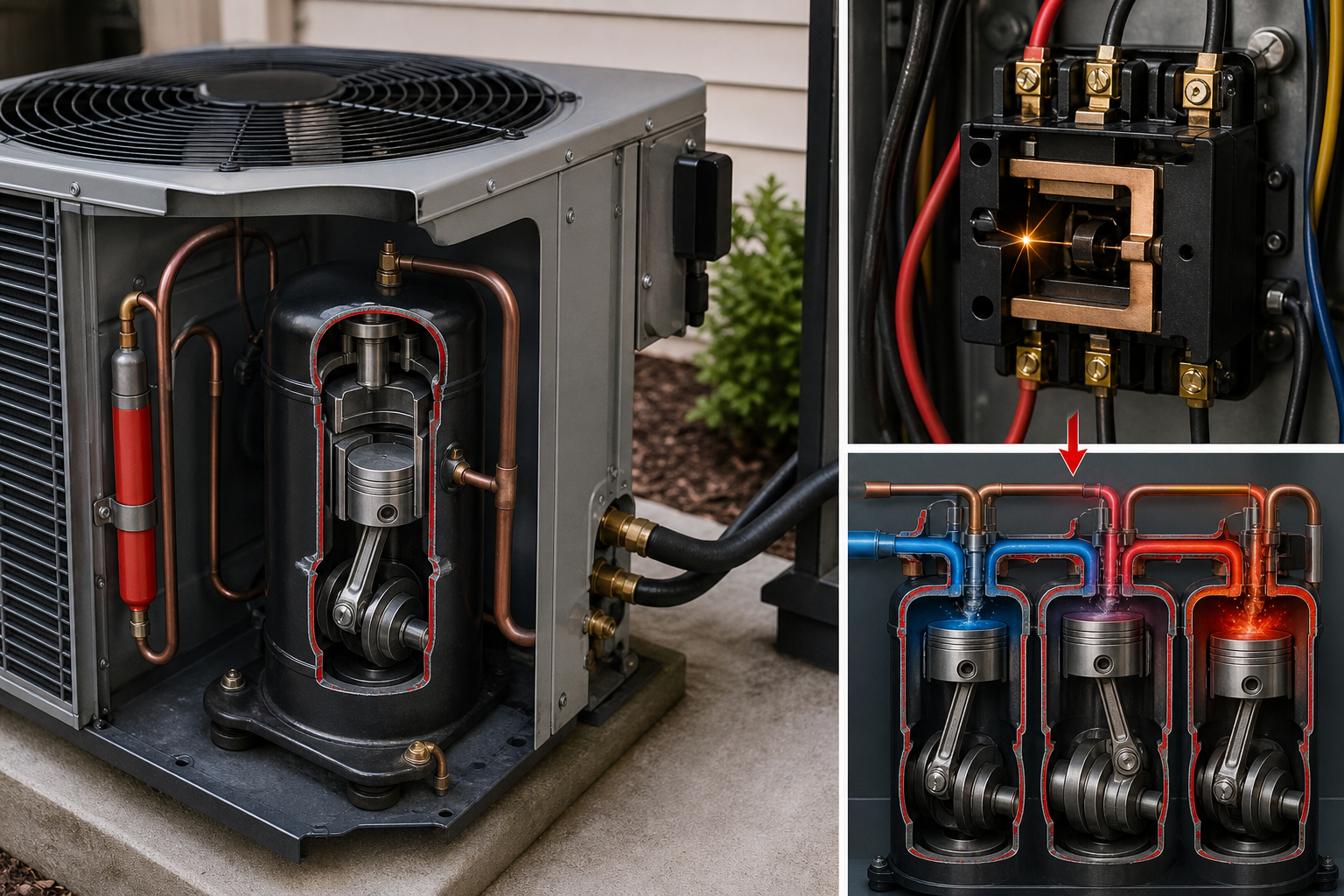
When you set the thermostat a few degrees lower than the room, the unit’s control board reads the temperature sensor and sends a 24 V signal to the outdoor contactor. That tiny voltage pulls the contactor’s coil, snapping shut the high‑current path that powers the compressor and fan motor.
Jack Frost Heating & Air Conditioning, Inc. often sees a mis‑set thermostat as the first culprit when a home feels no relief. A quick sanity check is to make sure the thermostat is in “cool” mode and the set point is below the current room temperature.
Inside the control board, a small relay checks the signal before it reaches the contactor. If the relay detects a fault, like low battery power in a wireless thermostat, it will hold the circuit open, preventing the compressor from turning on.
Once the contactor clicks, power flows to the compressor motor and the outdoor fan. The fan begins to spin, pulling ambient air across the condenser coil. This airflow is essential; without it the refrigerant would overheat and the compressor could seize.
For a quick pre‑season checklist, see Things to check before turning on your AC this summer. It walks you through thermostat settings, filter condition, and outdoor unit clearance.
Key takeaway: The thermostat’s 24 V call is the spark that awakens the whole system, but the signal must travel cleanly through relays and the contactor before any cooling can begin.
The Initial Surge – Compressor and Refrigerant Flow
With power now at the compressor, the motor spins up in under a second. The piston‑driven compressor squeezes low‑pressure refrigerant vapor into a high‑pressure, high‑temperature liquid. This pressure jump is what lets the refrigerant dump heat at the condenser.
During the first few seconds the suction line pressure drops while the discharge line pressure climbs rapidly. A healthy system will show about 70‑80 psi on the low side and 150‑250 psi on the high side at 75 °F ambient temperature.
Any hiccup here, like a weak start capacitor or a stuck contactor, shows up as a loud click followed by silence. That’s a classic short‑cycle symptom that a tech can spot with a simple gauge.
Our technicians often check that the compressor is level before it starts. A tilted unit can cause uneven refrigerant distribution, leading to pressure spikes. Learn why your HVAC needs a level surface for reliable operation.
The compressor’s job is to raise the refrigerant’s pressure and temperature, a step that sets up the heat‑exchange cycle.
Pro tip: If you hear the compressor hum but not spin, the start capacitor may be failing. Replacing it often restores proper surge behavior.
Heat Transfer and Air Cooling – The Evaporator at Work
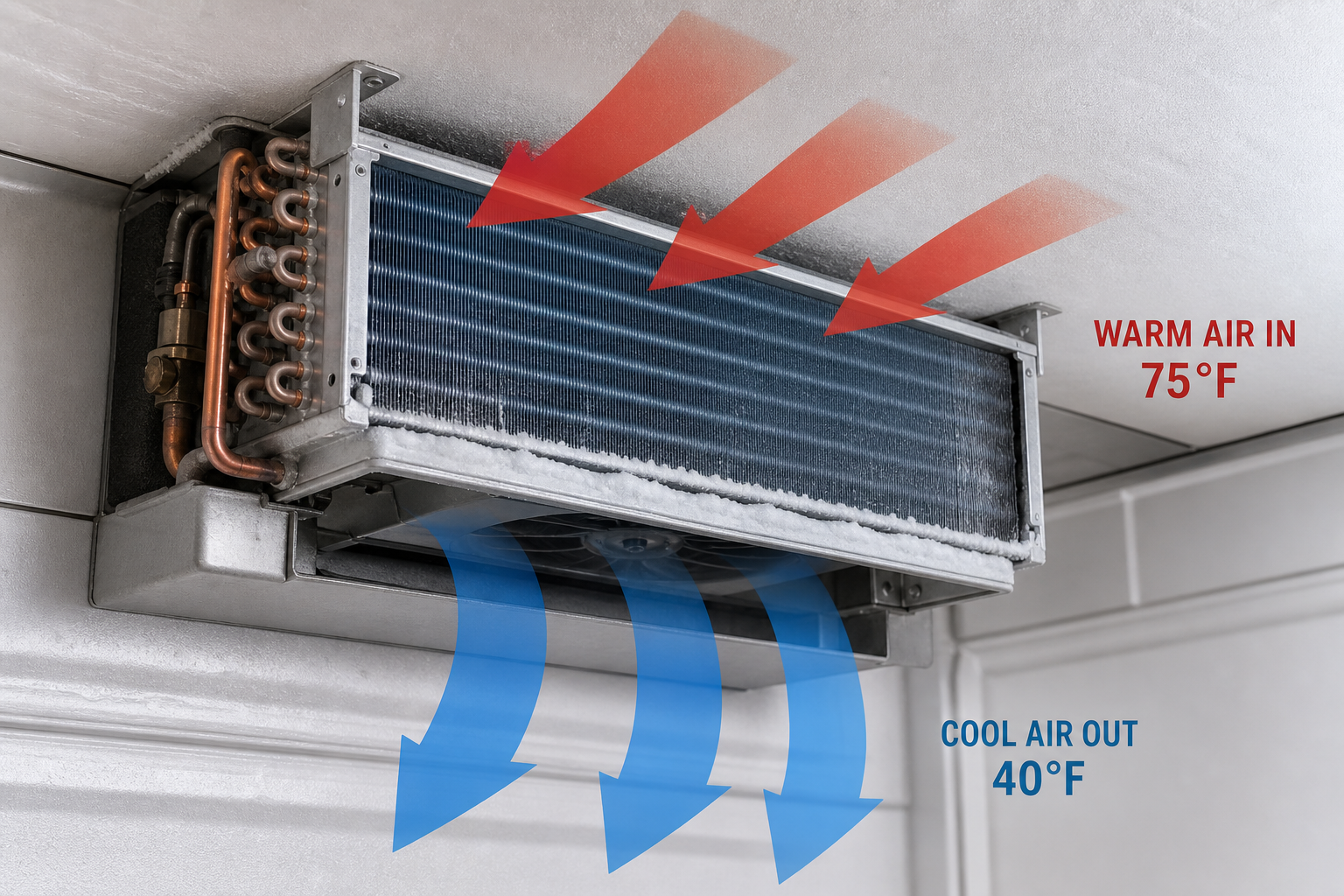
While the compressor pushes hot liquid refrigerant toward the indoor unit, the metering device (often a TXV) throttles the flow, turning the high‑pressure liquid into a low‑pressure vapor inside the evaporator coil.
As the refrigerant evaporates, it absorbs heat from the passing indoor air. The blower motor then pushes this cooled air through the ductwork into your living spaces.
The evaporator coil is coated with fins that increase surface area. Warm room air is forced over these fins, dropping its temperature by up to 15 °F before it reaches the supply registers.
During the first 10 seconds the blower may run at a lower speed to avoid drawing too much warm air over a coil that isn’t fully cold yet. This soft start protects the motor and reduces noise.
Because the refrigerant is still changing phase, the coil surface can feel slightly warm to the touch, don’t confuse that with a malfunction.
We often remind homeowners that a clean filter lets air move freely across the coil. A clogged filter starves the coil of airflow, making the evaporator work harder and the AC sound louder.
Bottom line: The evaporator’s phase‑change process is what actually cools the air you feel, and it only works right when the compressor has built enough pressure.
Reaching Steady State – The Final Minutes of Startup
By the 15‑minute mark the system should have settled into a stable loop. The compressor runs at full speed, the refrigerant pressures stay within spec, and the indoor blower delivers a constant stream of cool air.
During this period the thermostat’s internal sensor monitors room temperature. When the set point is reached, the thermostat tells the control board to turn off the compressor while the fan may keep running for a few minutes to pull residual heat out of the coil.
If the cycle runs longer than 15 minutes without reaching the set temperature, it could indicate low refrigerant charge, a stuck valve, or poor airflow.
Our preventive plan recommends a yearly Preventive HVAC maintenance checklist. It catches issues like dirty coils or weak fans before they cause long‑run inefficiencies.
Well‑tuned systems can shave 10‑15% off annual electricity bills. Keeping the system in steady state is the easiest way to reap those savings.
When the cycle finally stops, the contactor opens, cutting power to the compressor. The fan may linger a minute or two, then the whole unit rests until the thermostat calls for cooling again.
Frequently Asked Questions
What should I hear during the first 15 minutes?
You should hear a soft click as the contactor engages, followed by the compressor humming and the outdoor fan whirring. Inside, the blower starts at a low speed and ramps up. If you hear silence or a loud buzz, a component may be failing.
Why does my AC feel warm for the first minute?
The refrigerant is still pressurizing, so the evaporator coil hasn’t reached its cold‑plateau yet. Warm air can pass over the coil briefly, but the temperature should drop sharply after 30‑60 seconds.
Can a low refrigerant charge affect the 15‑minute startup?
Yes. Low charge means the compressor can’t build enough pressure, so the coil stays warm and the thermostat never sees a temperature drop. This often triggers short‑cycling.
Do I need to clean the filter before the AC starts?
Cleaning or replacing the filter ensures proper airflow across the evaporator. A clogged filter forces the blower to work harder, which can delay the cooling effect and increase energy use.
How often should I schedule professional maintenance?
We recommend a professional tune‑up at least once a year, preferably in early fall. A checkup catches dirty coils, weak capacitors, and pressure issues before the summer heat hits.
What if the AC shuts off before 15 minutes?
If the unit turns off early, the thermostat likely reached the set temperature quickly, which can happen on a very cool day. Otherwise, an overload, low refrigerant, or faulty sensor may have forced a shutdown.
Conclusion
If you want reliable cooling, trust Jack Frost Heating & Air Conditioning, Inc. for a seasonal check‑up and keep an eye on thermostat settings, filter condition, and outdoor unit clearance. Schedule a maintenance visit today to make sure every start‑up runs smooth and efficient.