

Summer heat hits East Tennessee hard, and your AC works overtime. The good news? The right window coverings can shave a noticeable chunk off your cooling bill. Below we walk through the exact steps to pick, install, and fine‑tune them for maximum savings.
Step 1: Assess Sun Exposure and Window Orientation
First, map each window to the direction it faces, north, south, east, or west. South‑facing windows soak up the most sun in the afternoon, while west‑facing panes catch late‑day heat that pushes your thermostat up.
Grab a compass or use a smartphone app, then note the size of each window. Bigger windows mean more heat gain, so they deserve the most aggressive shading.
We also recommend checking for any existing overhangs or trees that already block sun. If a window gets less than three hours of direct sun, a light fabric shade may be enough. Otherwise, go for a high‑performance solution.
Understanding orientation lets you match the covering to the climate. For example, studies show external horizontal blinds can actually increase energy use by 24% on south‑facing windows, so avoid that combo.
Blocking airflow without the right shading can backfire, reinforcing the need for a targeted approach. Closing air vents in unused rooms also illustrate how improper airflow management raises energy use.
Step 2: Choose the Right Type of Covering
Now that you know the exposure, pick a covering that matches the window’s orientation and your comfort goals.
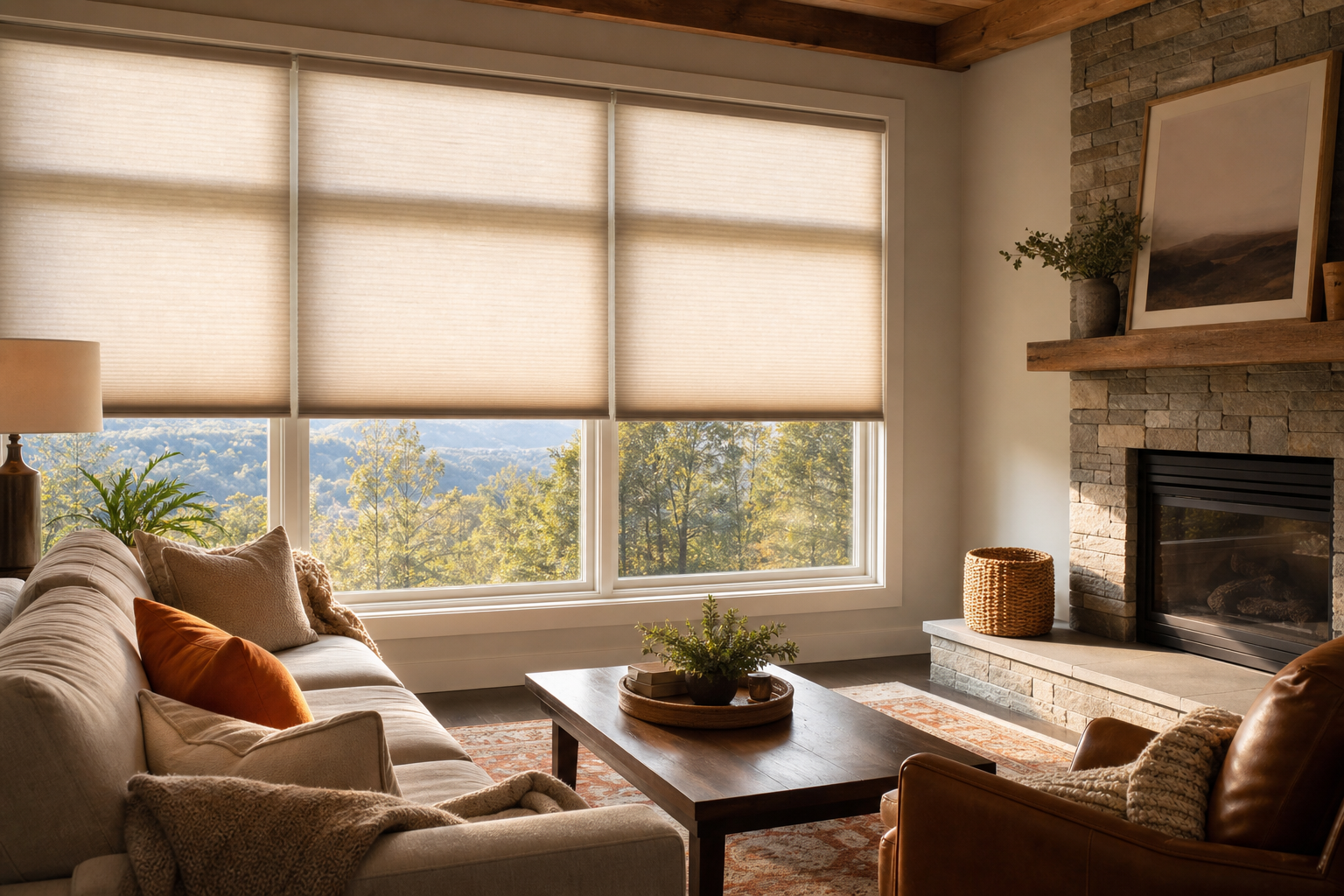
Cellular shades are a solid bet for most homes. They trap air in their honeycomb cells, cutting cooling loads by 15%‑42% and delivering $69‑$141 of annual savings per window (source). They also keep daylight while limiting glare.
If you have a west‑facing window, horizontal shading panels perform best, slashing solar heat gain by about 42% (source). Their deeper projection can shade the glass longer into the evening, but watch the depth if you have limited exterior space.
For south‑facing panes, an external roller shutter can reduce solar heat gain by about 29.4% for south‑facing windows in temperate climates (Rzeszów, Poland). They block the sun before it hits the glass, which is the most efficient point in the heat‑transfer chain.
Vertical blinds inside the home don’t move the needle; research found no measurable energy impact for interior vertical blinds. If you love the look, pair them with a reflective film instead.
Consider external sun screens when you need a balance of daylight and heat control. They cut heat gain by about 25% across many U.S. locations, making them a versatile middle ground.
And remember, any covering that traps heat can backfire on south‑facing windows, avoid external horizontal blinds in that spot.
Step 3: Install Coverings for Maximum Effectiveness
Installation matters as much as the product choice. Mount external solutions, external roller shutter (typical solar heat gain reduction of 29.4% for south‑facing windows in temperate climates), sun screens, or horizontal panels, outside the frame so they shade the glass before the sun reaches it.
For internal options like cellular shades, fit them snugly within the window frame to avoid gaps. Gaps let warm air leak in, eroding the benefit.
Use a level and a drill with the right anchors for your wall type. In older homes, you may need to reinforce the mounting points to handle wind load.
After mounting, test the operation. Close and open the covering several times to ensure smooth movement. A sticking shade can create drafts that force the AC to work harder.
Seal any seams with weather‑proof caulk. Even a thin line of air can add up over a hot summer day.
Step 4: Optimize Operation with Vertical Shading Panels
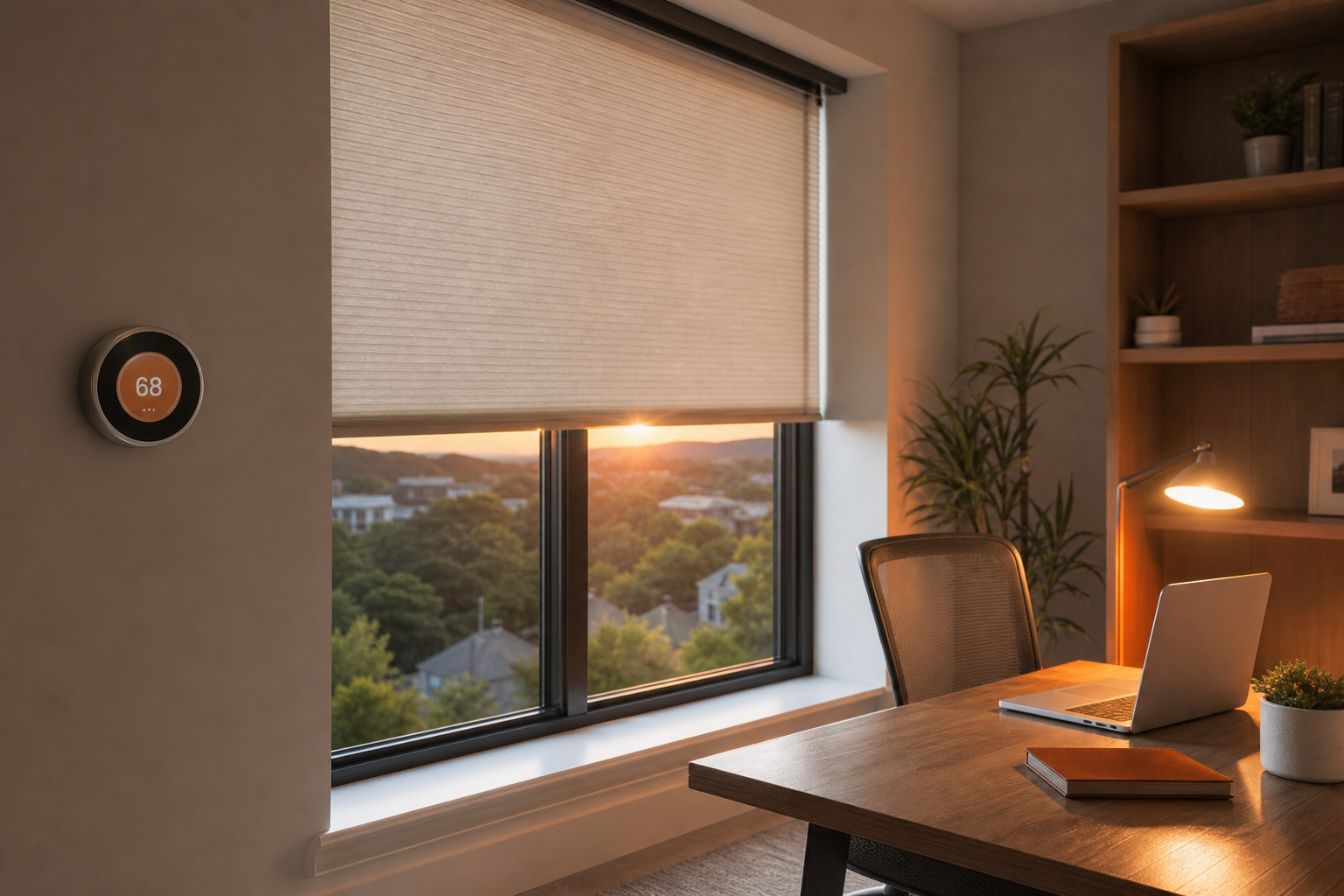
Coverings work best when they’re coordinated with your HVAC system. A thermostat can lower the cooling set‑point when the shades are down, then raise it once the sun goes off.
Vertical shading panels are most effective on west‑facing façades in mild climates, though their deeper projection can affect building aesthetics and reduce daylight.
Program the shades to close automatically at sunrise for west‑facing windows and open at sunset. Many shade systems integrate with common control interfaces, letting you set schedules without lifting a finger.
If you have a zoned HVAC system, pair zone‑specific shading with the corresponding thermostat. That way you only cool the rooms you’re using.
Automated shading schedules can respond to temperature changes, adjusting the shades to maintain interior comfort.
We often recommend a simple rule: keep shades closed during the hottest three hours of the day, then open them to let night‑time breezes flush the house.
Coordinating shading with HVAC operation can improve energy efficiency and reduce equipment wear.
Step 5: Compare Covering Options and Savings
Below is a quick matrix that lines up the most common coverings, their typical heat‑gain reduction, and the dollar savings you can expect based on research data.
When you match the covering to the right orientation, you tap into the highest reduction percentages. For most East Tennessee homes, cellular shades plus an external sun screen on a south‑facing window yields the best overall balance of cost, daylight, and cooling cut‑backs.
We often see homeowners combine internal cellular shades with an external screen on the same window. The screen blocks the bulk of solar heat, while the shade trims glare and adds privacy.
If you need help picking the exact product or sizing, Jack Frost Heating & Air Conditioning, Inc. offers a free on‑site evaluation. Our team checks orientation, window size, and existing ductwork to recommend the optimal combo.
Attic insulation information shows how sealing the roof deck works hand‑in‑hand with window shading to push savings even higher.
FAQ
Can window coverings really lower my AC bill?
Yes. Proper shading cuts solar heat gain, which reduces the amount of time your AC runs. Studies report up to a 42% reduction in heat gain and $70‑$140 annual savings for cellular shades.