

Winter in East Tennessee can feel like a gentle chill one day and a bitter freeze the next. That swing makes picking the right heating system feel like a gamble. In this list we break down the top heat‑pump and furnace options, weigh up costs, efficiency, and how each handles our local weather. By the end you’ll know which system gives you comfort, savings, and peace of mind.
1. Jack Frost Heating & Air Conditioning, Inc. Air-Source Heat Pump, Ideal for mild East Tennessee winters
We love an air‑source heat pump when the outdoor temps stay above the balance point most of the season. It pulls heat from the air, amps it up with a compressor, and pushes warm air into your home. In mild weather the unit runs at a high coefficient of performance (COP), meaning you get up to three units of heat for each unit of electricity.
Because the system also cools, you replace a separate air conditioner with one piece of equipment. That cuts down on ductwork, wiring, and maintenance visits. Our technicians in Seymour and Knoxville make sure the unit is sized right for your square footage, so you avoid the dreaded “oversized” trap that can waste energy.
Key things to watch for:
- Look for the ENERGY STAR label; it guarantees a minimum HSPF of 8.5 and SEER of 14.
- Make sure the outdoor unit has a low‑noise fan if it sits near a bedroom.
- Ask for an outdoor lock‑out thermostat to keep auxiliary electric heat from kicking in unnecessarily.
A heat pump’s need for backup heat depends on the equipment, outdoor temperature, and home’s heating load. If the system uses electric heat strips, they can increase operating costs, so proper sizing and control settings matter.
Our crew checks the duct leakage and airflow resistance before we install, because a leaky duct can eat up the efficiency gains.
According to the U.S. Department of Energy, a properly installed air‑source heat pump can deliver up to four times more heat energy than the electrical energy it consumes Energy.gov. That’s a solid reason to consider it for a home that already has decent insulation.
We’ve installed dozens of these units across the Knoxville area, and homeowners tell us the difference is noticeable the first winter they run.
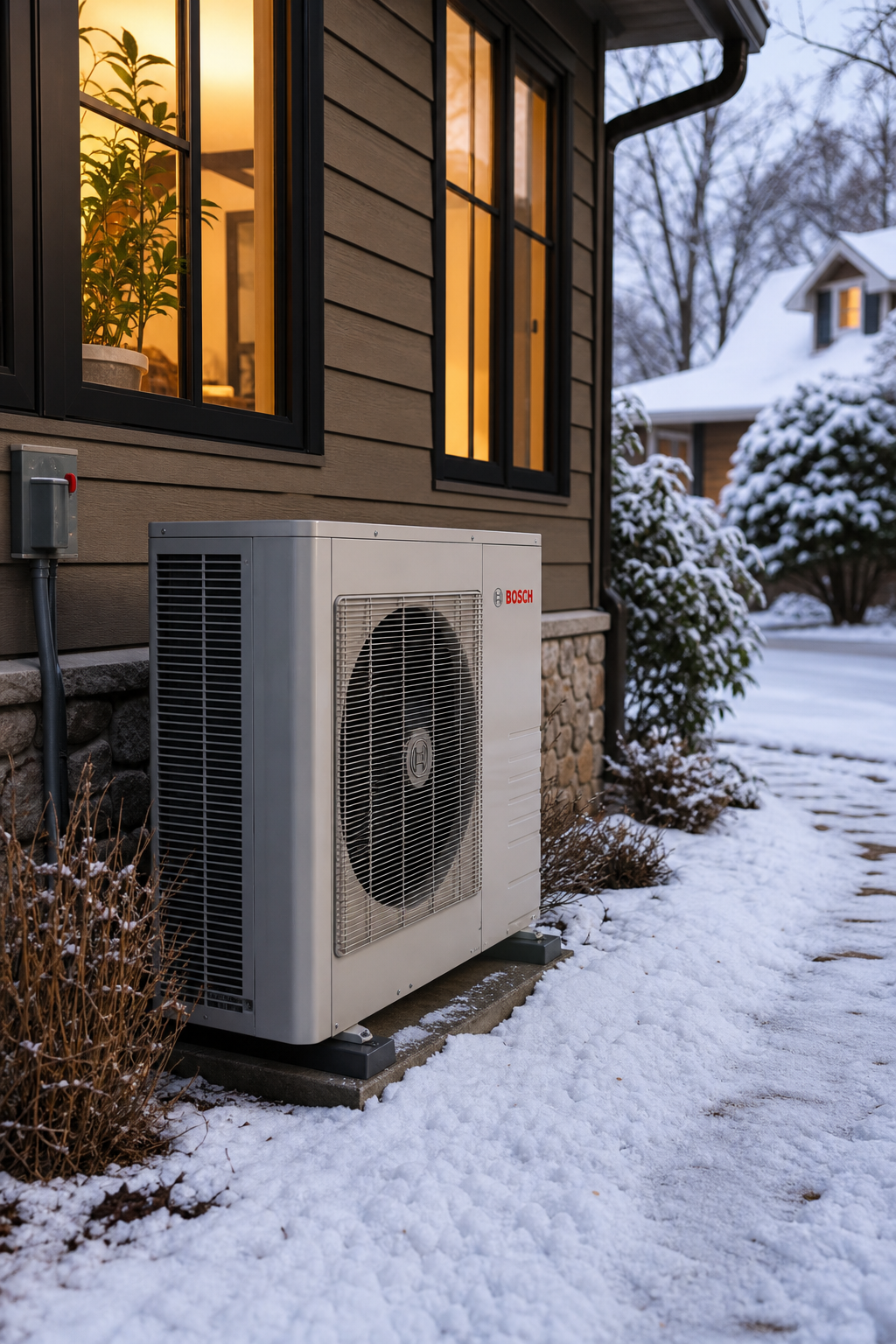
Bottom line: If your winter rarely drops below 30°F, the Jack Frost Heating & Air Conditioning, Inc. air‑source heat pump gives you heating, cooling, and a tidy system with low operating costs.
2. Ground‑Source (Geothermal) Heat Pump , Ultimate efficiency for cold snaps
We turn to the earth when the air gets too cold for a regular pump. A geothermal loop stays at a steady 50‑55°F year‑round, so the heat pump never struggles with frost. That constant temperature lets the system hit a COP of 4 or higher even when outside temps plunge to -10°F.
Installation means drilling vertical wells or laying horizontal trenches. It’s a bigger upfront project, but the energy savings can pay back in 10‑15 years, especially when you qualify for utility rebates. Jack Frost Heating & Air Conditioning, Inc. offers design and installation services for these systems throughout Seymour and Knoxville.
Key advantages:
- Very low operating cost , the electricity you use is a fraction of a conventional heat pump.
- Quiet indoor operation , the only moving part inside is the air handler.
- Long lifespan , the loop lasts 50+ years, the indoor unit 20‑25 years.
Potential downsides include higher installation labor and the need for enough land for the loop. In tight urban lots we often go vertical, which means a drilling crew and a few extra days on site.
When sizing a geothermal system we look at your home’s heating load, the soil’s thermal conductivity, and the available acreage. Our engineers run a quick load calculation and then propose a loop design that fits your property.
New York’s Clean Heat program proves that cold‑climate ground‑source systems can meet 100 % of a home’s heating needs even in deep freeze conditions CleanHeat.NY.gov. That research lines up with what we see in the Smokies, the system stays warm while the air outside is bitter.
Homeowners love the quietness and the fact that there’s no outdoor unit to freeze over.
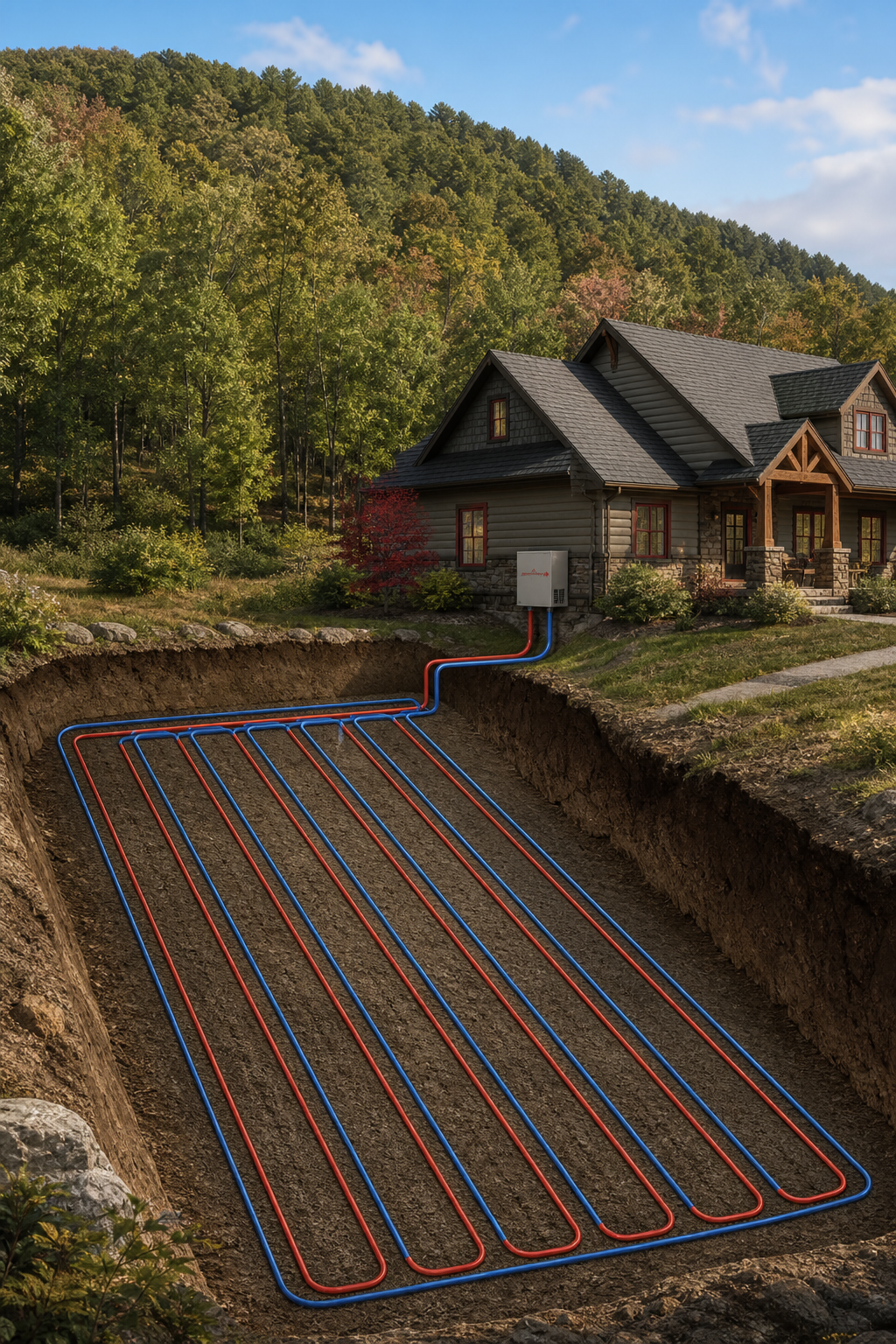
Takeaway: If you have space and want the highest efficiency even on the coldest days, a ground‑source heat pump is the way to go.
3. High‑Efficiency Gas Furnace , Reliable heat on a budget
We know gas furnaces have been the workhorse of American homes for a century. Modern high‑efficiency models now hit 96 % AFUE, meaning almost every BTU of fuel turns into warm air. In East Tennessee, natural gas is still cheap and widely available, so the operating cost stays low.
Installation is straightforward if you already have gas service and ductwork. Our crew checks the venting, adds a stainless‑steel exhaust pipe if needed, and makes sure the blower matches your duct size.
Pros:
- Fast heat delivery, the furnace can bring indoor temps up by 30°F in minutes.
- Low upfront cost, a basic model starts around $3,500 installed.
- Long lifespan, many units run 20‑25 years with regular service.
Cons:
- Combustion produces CO₂, so you have a carbon footprint.
- Requires gas line; if you move to a location without gas, you’ll need a new system.
Our gas furnaces are ENERGY STAR certified, which the DOE says is the benchmark for high‑efficiency equipment. That certification assures you’re getting the best AFUE rating available for the price.
When you compare a $5,500 average heat‑pump install cost to a $3,500 furnace install, the furnace wins on price by aboutaverage cost gap between heat pump and furnace. Installation costs vary with the equipment, the home, and the work required. We compare heat pump and furnace options for each customer so they can weigh the upfront price against operating costs and comfort.
That’s why many families in the Knoxville metro pick a gas furnace when upfront budget matters.
We always run a combustion safety test after install to catch any leaks before you turn the system on.
Bottom line: For a reliable, fast‑heating system that fits a tighter budget, the high‑efficiency gas furnace remains a solid choice.
4. Hybrid Dual‑Fuel System , Best of both worlds for extreme winters
We combine a heat pump with a gas furnace, letting each do what it does best. The pump handles mild days, the furnace jumps in when the mercury falls below the balance point.
This setup gives you the energy savings of a heat pump most of the year while keeping a reliable backup for the deep‑freeze episodes that East Tennessee can see in January.
How it works:
- The thermostat watches the outdoor temperature.
- If it’s above 45°F, the heat pump runs.
- When conditions call for it, the system controls switch heating from the heat pump to the gas furnace.
Because each component runs only when it’s efficient, you can shave 30‑50 % off your heating bill compared to a furnace‑only system. The dual‑fuel design also spreads wear across two machines, extending overall system life.
We size the heat pump a bit smaller than you would for a stand‑alone unit, then match the furnace size to the peak load. That way the furnace never runs at full blast for long periods.
The U.S. Department of Energy notes that dual‑fuel systems can reduce electricity use for heating by about half when the climate swings between mild and cold dual‑fuel information. That aligns with what our customers in the Smoky Mountains report, lower bills and no cold spots.
Installation does add a bit of complexity: you need a compatible thermostat that can manage the switch, and a control board that talks to both units. Our certified technicians handle that wiring and program the system to your preferred comfort schedule.
When the furnace kicks in, it runs at full blast for a short burst, then hands back to the pump as soon as the temperature climbs. That rapid hand‑off keeps indoor temps steady without the “boom‑and‑coast” feel of a single‑stage furnace.
Takeaway: If you want both efficiency and the safety net of a furnace for the coldest days, a hybrid dual‑fuel system hits the sweet spot.
5. Mini‑Split Heat Pump , Flexible zoning for homes and cabins
We love mini‑splits for older cabins or homes where adding ducts would be a nightmare. Each indoor air‑handler can be placed in a different room, so you heat or cool only the spaces you use.
Jack Frost Heating & Air Conditioning, Inc. specializes in designing and installing these systems for East Tennessee homes, offering expert guidance on sizing and placement.
Because the units are ductless, there’s no duct leakage to worry about. That means the rated efficiency stays close to the lab number , often a SEER of 20‑30 and an HSPF of 10‑12.
Installation steps:
- Mount a small condenser on the exterior wall.
- Run a refrigerant line and a thin power cable to each indoor handler.
- Connect to a smart thermostat that can control each zone independently.
Mini‑splits shine in homes with irregular floor plans. You can set the bedroom to 68°F while the living room stays at 72°F, saving energy on rooms you leave empty.
Mini-splits vary in how much heat they can provide during cold weather. We check the home’s heating load and the selected unit’s cold-weather performance to determine whether supplemental heat is needed.
According to the Energy Saver program, ductless heat pumps can be up to three times more efficient than electric resistance heating Energy.gov. That makes them a smart choice for a vacation home where you only run the system a few months a year.
We recommend a professional load calculation for each room, because oversizing a mini‑split can cause short‑cycling and higher wear.
Bottom line: If you need zone control, limited space for ductwork, or a quick retrofit, the mini‑split heat pump delivers comfort without a big construction project.
6. Variable‑Speed Furnace , Quiet operation with precise temperature control
We hear the difference the moment a variable‑speed furnace starts up. Instead of a loud blast, the ECM blower ramps up slowly, keeping noise down to a library‑level 40‑50 dB.
Because the motor can run at many speeds, the furnace runs longer at lower output. That steady airflow eliminates hot‑and‑cold spots and keeps humidity in check.
Key benefits:
- Up to 35 % lower electricity use for the blower compared to a single‑speed motor.
- More even temperature , swings shrink to 1‑2°F instead of 4‑5°F.
- Better indoor air quality , longer run time means more air passes through the filter.
Installation is similar to a standard furnace, but we must program the control board to match your thermostat’s fan settings.
The U.S. Department of Energy notes that heating and cooling can make up nearly 50 % of household energy use U.S. Department of Energy. By running at lower speeds, a variable‑speed furnace trims that share.
Homeowners who value a quiet night report that the furnace is barely audible, even when it runs through the night in the dead of winter.
We recommend pairing a variable‑speed furnace with a smart thermostat that can learn your schedule. The thermostat can tell the furnace to run at a low stage during the night, then ramp up before you wake.
Takeaway: If a quiet home and tight temperature control matter, a variable‑speed furnace gives you comfort without the roar.
7. Modulating Gas Furnace , Continuous flame for optimal comfort
We think of modulating furnaces as the premium tier of gas heating. Instead of two stages, the burner can adjust its output in 1‑% increments between 40 % and 100 % capacity.
This fine‑grained control means the furnace never overshoots the setpoint. You feel a gentle, steady warmth rather than a short blast followed by a cool dip.
Advantages include:
- Highest AFUE ratings , often 98 % or higher.
- Minimal temperature swing , indoor temps stay within 1‑2°F of your target.
- Lower fuel consumption , the furnace only burns what’s needed.
The downside is a higher purchase price, typically $1,000‑$2,000 more than a two‑stage model. However, the energy savings can pay that back in 5‑7 years in a climate that sees 6‑8 months of heating.
Our technicians run a combustion analysis after install to verify that the flue gases are within safe limits. That step is critical for modulating units because they run at lower flame heights for long periods.
According to a recognized energy‑efficiency program, a modulating furnace can cut natural‑gas use by up to 15 % compared with a standard 96 % AFUE unit, as reported by industry sources. That translates to lower bills and a smaller carbon footprint.
Because the unit runs constantly at low output, the noise level is comparable to a variable‑speed furnace , a soft hum rather than a roar.
Bottom line: If you want the smoothest temperature curve and are willing to invest a bit more upfront, a modulating gas furnace is the premium pick.
8. Heat Pump Using R‑454B Refrigerant, Lower Global Warming Potential
We’re seeing more installers opt for units that run on R‑454B, a refrigerant with a much lower global warming potential (GWP) than the older R‑410A. That shift helps you meet future EPA phase‑down rules while still getting high efficiency.
R‑454B has a substantially lower global warming potential than R‑410A: approximately 465 compared with 2,088, according to the EPA.
When you choose an R‑454B heat pump, you also get newer inverter‑driven compressors that can modulate speed, further boosting efficiency in partial‑load conditions. Some newer models also offer R‑32 options for comparable performance.
Our service team runs a refrigerant‑charge verification after every install to make sure the system runs at peak performance and stays within EPA limits.
Industry data from the DOE shows that newer refrigerants can improve seasonal efficiency by 5‑10 % over legacy models industry source. That gain can shave a few hundred dollars off your annual electricity bill.
Because the refrigerant is more environmentally friendly, you may qualify for additional local rebates aimed at low‑GWP equipment.
Takeaway: If sustainability matters to you and you want a heat pump that complies with future regulations, look for the R‑454B version.
9. Electric Resistance Heater , Simple backup for mild days
We keep electric resistance heaters in mind as a fallback when the outdoor temperature is just above freezing and you don’t want to fire up the furnace. These units turn electricity directly into heat, so the conversion efficiency is technically 100 %.
The catch is that the electricity itself often comes from fossil‑fuel power plants, making the overall cost higher. In East Tennessee the grid mix leans heavily on natural gas, so the effective cost can be 2‑3 times a gas furnace per BTU.
Typical uses include:
- Supplemental heat in a finished basement where the main system never reaches.
- Portable baseboard units for a rental unit that doesn’t have central heat.
- Emergency heat if the gas line fails.
When you install a resistance heater, make sure the circuit can handle the load , a 1500‑watt heater draws 12.5 amps on a 120‑V circuit.
The U.S. Department of Energy notes that heat pumps are generally 50 % more efficient than electric resistance heating Energy.gov. That’s why we recommend a heat pump as the primary system and keep resistance heaters only as a short‑term backup.
If you choose a baseboard heater, install it under the window so the warm air rises and offsets the cold downdraft from the glass.
Bottom line: Use electric resistance heaters sparingly , they’re cheap to install but pricey to run.
10. Propane Furnace , Viable where natural gas isn’t available
We turn to propane when a home sits off the main gas line. Propane delivers the same high‑temperature flame as natural gas, but you’ll need a storage tank and periodic refills.
Key points to consider:
- Installation includes a tank, a regulator, and a vent pipe.
- Fuel cost per BTU is higher than natural gas, but the furnace’s AFUE can still reach 95‑%.
- Tank size matters , a 500‑gallon tank can last a full winter for a typical 2,000‑sq‑ft home.
Our technicians size the furnace and tank together, so you never run out of heat mid‑season. We also offer a monitoring service that alerts you when the tank is low.
Research from the University of Connecticut’s agricultural extension shows that propane’s heating value is about 91,500 BTU per gallon, making it a reliable backup for remote cabins UConn IPM.
Because propane burns cleaner than oil, the exhaust venting is simpler and you avoid the soot buildup that oil furnaces can cause.
Takeaway: If your property lacks natural‑gas service, a propane furnace gives you the same strong heat with a modest fuel‑price premium.
11. Condensing Furnace , High efficiency with heat recovery
We love condensing furnaces for their ability to reclaim heat from flue gases. A secondary heat exchanger extracts warmth that would otherwise escape up the vent, pushing AFUE ratings up to 98‑99 %.
The system uses stainless‑steel heat exchangers to resist corrosion from the acidic condensate. That means you’ll see a small drip pan and a condensate pump, but the trade‑off is far lower fuel use.
Benefits include:
- Up to 3 % more efficiency than a standard 95 % furnace.
- Reduced vent size , the exhaust gas is cooler, so you can use a smaller PVC pipe.
- Lower emissions , less CO₂ per unit of heat produced.
Installation requires proper drainage for the condensate and a vent that meets local code. Our crew checks the slope and adds a pump if the condensate must travel uphill.
The DOE’s recent HSPF2 update emphasizes that high‑efficiency units, whether heat pump or condensing furnace, are the best way to cut home‑energy use DOE HSPF2 information. That lines up with our field data , homes with condensing furnaces see a 10‑15 % drop in their natural‑gas bills.
Because the furnace runs hotter, you’ll notice a crisp, dry heat that many East Tennessee homeowners prefer on bitter nights.
Bottom line: If you want the highest fuel efficiency without switching to electricity, a condensing furnace is the top choice.
Frequently Asked Questions
What size heat pump do I need for a typical 2,000‑sq‑ft home in East Tennessee?
We start with a Manual J load calculation that looks at insulation, window count, ceiling height, and local climate data. For a well‑insulated 2,000‑sq‑ft home, a 3‑ton (36,000 BTU) air‑source unit usually covers the heating load up to the balance point around 38°F. If your home has higher heat loss, we may step up to a 4‑ton unit or recommend a dual‑fuel setup to cover the coldest days.
How do I know if a dual‑fuel system is worth the extra cost?
Compare your heating‑season degree‑days. If you see more than 2,000 heating degree‑days below 40°F, a dual‑fuel can save 30‑50 % on electricity and give you reliable heat when the pump’s COP drops. We’ll run a cost‑benefit analysis that factors in local gas prices, electricity rates, and any available rebates.
Can I use a smart thermostat with any of these systems?
Many heating and cooling systems can use a smart thermostat, but compatibility depends on the equipment, wiring, and whether the system uses proprietary controls. For a dual-fuel system, the thermostat must also support proper heat pump and furnace changeover. We check compatibility before recommending or installing one.
What maintenance does a geothermal heat pump require?
Geothermal loops need little to no routine care , they’re buried underground. The indoor air handler should get a filter change annually, and the heat exchanger needs a visual inspection for corrosion. We recommend a full system check every 3‑5 years to verify refrigerant charge and pump performance.
How do I qualify for rebates on high‑efficiency equipment?
Many Tennessee utilities run seasonal rebate programs for ENERGY STAR‑rated heat pumps and condensing furnaces. After we install, we’ll provide the paperwork and the required performance data (SEER, HSPF, AFUE). You can also check the DSIRE database for state incentives that apply to East Tennessee.
Is a propane furnace safe for a small cabin?
When installed by a licensed professional, a propane furnace is as safe as a gas furnace. We include a carbon‑monoxide detector recommendation and set the vent pipe to clear any snow buildup. Regular annual checks keep the system safe and efficient.
Choosing the right heating system isn’t a one‑size‑fits‑all decision. You need to weigh climate, budget, existing infrastructure, and long‑term comfort goals. The options we’ve outlined cover everything from low‑cost gas furnaces to high‑efficiency geothermal loops. Each offers a different balance of upfront cost, operating expense, and environmental impact.
Our team at Jack Frost Heating & Air Conditioning, Inc. can run a free home‑energy audit, model out the savings for each option, and guide you through any local rebates. Because we’re neighbors, we know the Knoxville‑Seymour climate quirks better than anyone.
When you’re ready to make a move, give us a shout. We’ll size the system, handle permits, and install it with a clean, quiet finish. The comfort that lasts starts with the right choice, and we’re here to help you pick it.