

Ever walked into your home on a hot summer day, expecting a blast of cold air, but instead felt a gentle, lukewarm breeze? Or maybe you noticed your electricity bill climbing even though you haven’t changed your habits. These could be signs of something serious: a freon leak in your air conditioner. Freon, also called refrigerant, is the lifeblood of your AC system. When it leaks, your AC struggles to cool your home, and if ignored, the problem only gets worse. In this guide, we’ll walk you through the most common freon leak symptoms, where leaks typically happen, how to find them yourself, and what to do next. We’ll also cover health risks and prevention tips so you can keep your family safe and comfortable.
How to Recognize the Signs of a Freon Leak
Spotting a freon leak early can save you from big repair bills and a lot of discomfort. The signs are often easy to notice if you know what to look for. Let’s break them down one by one.
Warm Air from the Vents
The most obvious symptom is that your AC stops blowing cold air. Instead, you feel air that’s just slightly cool or even warm. That’s because there isn’t enough refrigerant to absorb the heat from inside your home. Your system might run for hours but barely cool the temperature. This is a classic freon leak symptom that shouldn’t be ignored.
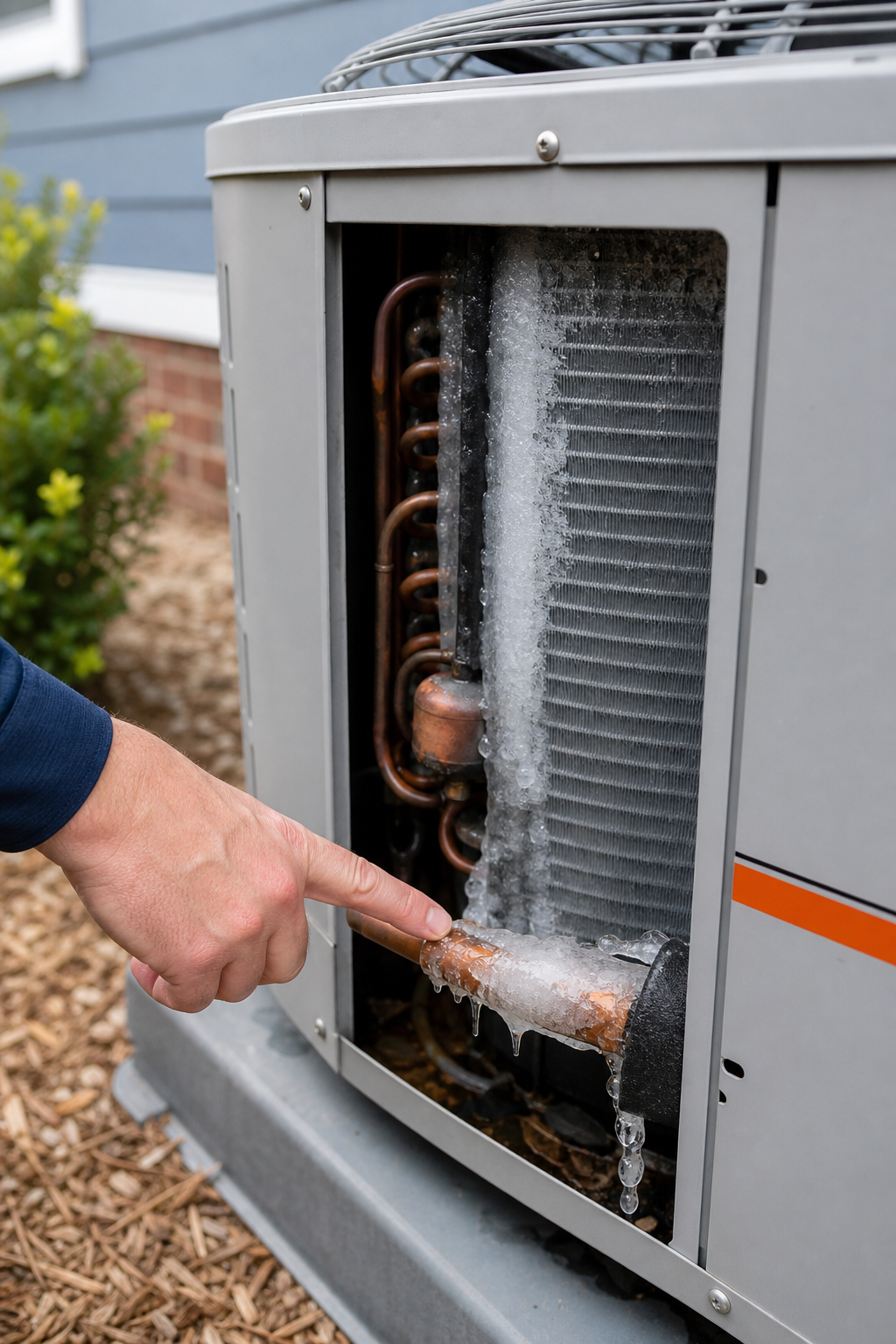
Ice Buildup on Copper Lines or Coils
It sounds strange, but a leak can make your AC freeze up. When refrigerant levels drop, the pressure in the system changes. The evaporator coils get too cold, and moisture in the air freezes on them. You might see ice on the copper lines leading to your outdoor unit or on the indoor coil. This is a major red flag. As one technician put it, ice on the coils means you likely have a leak—similar to what’s described in our guide on why your AC freezes up in summer and how to fix it.
Higher Energy Bills
When your AC is low on refrigerant, it has to run much longer and harder to cool your home. That extra work shows up directly in your electricity bill. If you see a sudden spike in your energy costs without a change in weather or usage, a refrigerant leak could be the cause. According to the U.S. Department of Energy, keeping your AC properly charged helps it run efficiently.
Hissing or Bubbling Sounds
Listen closely near your indoor unit or outdoor compressor. A hissing noise often means gas is escaping from a small hole or crack in the refrigerant line. A bubbling sound can indicate a larger leak, especially if you hear it from the evaporator coil. These sounds are easiest to hear when the compressor is running. If you notice any unusual noises, it’s time to investigate.
Oil Residue on Lines or in the Drain Pan
Refrigerant carries a small amount of oil as it circulates. When a leak occurs, that oil can leave a greasy spot on the copper tubes or drip into the condensate drain pan. Look for dark, oily patches on the lines near connections or in the pan under your indoor coil. This is one of the most reliable visual signs of a freon leak.
Where Freon Leaks Typically Occur in Your AC System
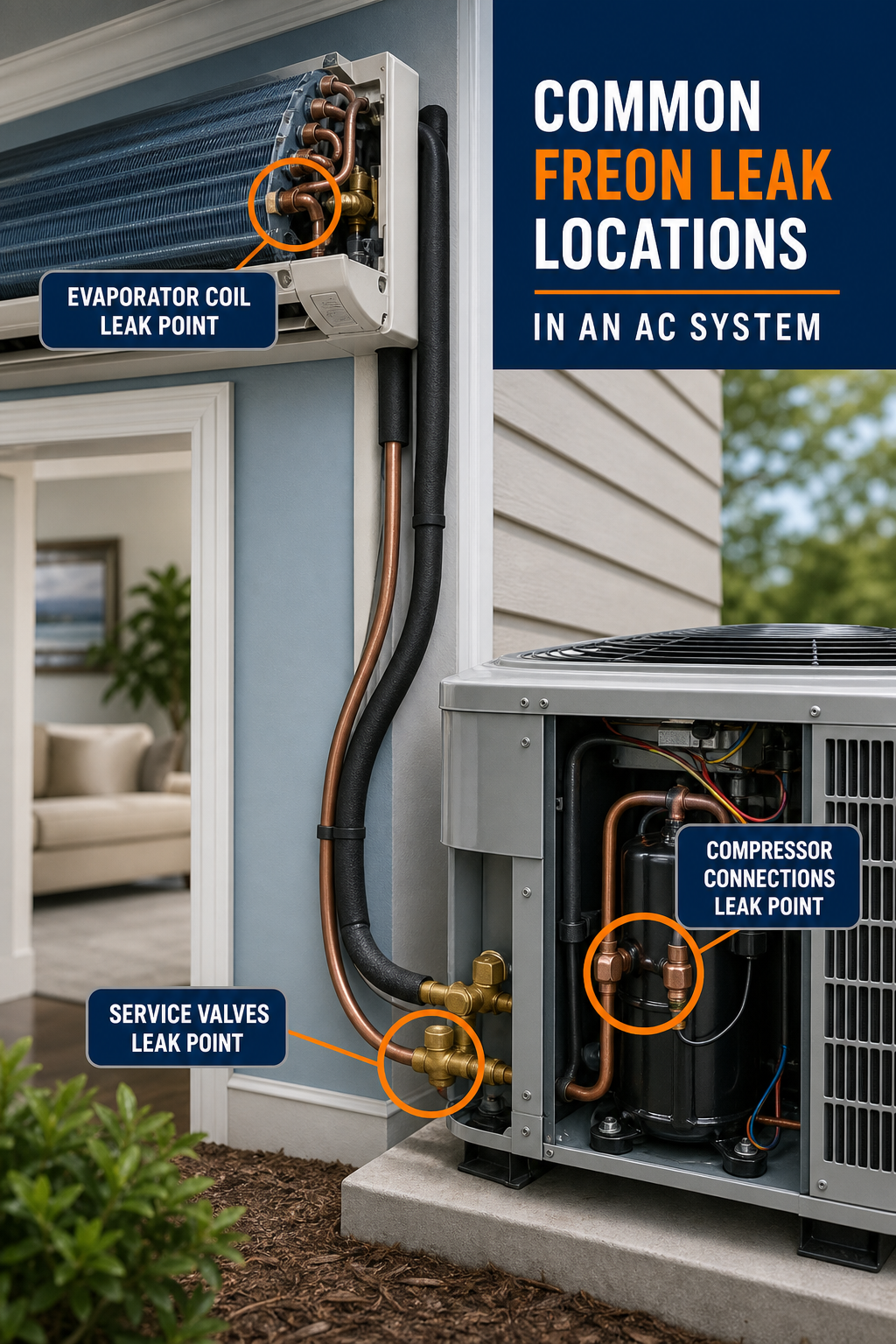
Freon leaks don’t happen just anywhere. They tend to show up in specific weak points of your air conditioning system. Knowing these spots can help you, and our technicians, find the problem faster.
Evaporator Coil (Indoor Unit)
This is the most common place for leaks. The evaporator coil is inside your air handler or furnace. It’s made of thin copper tubing with aluminum fins. Over time, corrosion from household chemicals like bleach or fabric softener, or even from formic acid in some cleaning products, can eat tiny pinholes in the copper. These pinholes let refrigerant seep out slowly. Industry professionals note that about 70% of leaks are found in evaporator coils, and dye often pools underneath them.
Outdoor Condenser Coil
The condenser coil in the outdoor unit can also leak. It’s exposed to weather, debris, and sometimes salt air if you live near the coast. On micro-channel coils (thin aluminum with small channels), corrosion is even faster. The outdoor unit’s service valves, where technicians hook up gauges, are another frequent leak spot. The valve cores can go bad, or the caps may not seal properly.
Line Set Connections
The copper lines that run between your indoor and outdoor units have many connections: at the service valves, at the filter-dryer, and at the evaporator coil. These joints are made with brazing or flare fittings. Poor brazing, vibration, or metal fatigue can cause cracks at these points. Look for oil residue near any connection.
Compressor Itself
Though less common, the compressor can leak at its electrical terminals or where the lines enter. The compressor case is thick steel, so leaks here are usually from a bad gasket or a damaged service port. This is a harder fix and often requires replacing the compressor.
Why Freon Leaks Happen: Common Causes
Understanding why refrigerant leaks develop can help you prevent them. Leaks don’t appear out of nowhere. They’re usually the result of wear and tear, chemical reactions, or installation issues.
Corrosion
This is the number one cause. As we mentioned, chemicals in your home combine with moisture to create formic acid. This acid slowly eats away at copper tubing, especially on the evaporator coil. The same thing can happen outdoors if the coil is exposed to salt or harsh weather. Corrosion causes tiny pinhole leaks that are hard to find but can lose all your refrigerant over months.
Vibration
Your AC unit vibrates when it runs. Over years, that vibration can cause copper lines to rub against metal brackets or aluminum fins. The friction eventually wears a hole. This is common where the lines pass through the cabinet of the air handler or where they touch the condenser fins.
Poor Installation
If your system wasn’t installed properly, leaks are more likely. For example, if the service valves were overheated during brazing, the internal O-rings can melt and fail. Or if the line set wasn’t properly supported, it can sag and create stress at the connections. A good installation prevents many future problems.
Age and Wear
All mechanical parts eventually wear out. The rubber seals in service valve cores can dry out and crack. The thin copper in modern coils can develop stress fractures over time. The older your system, the higher the chance of a leak. That’s why regular maintenance is so important.
How to Detect a Freon Leak at Home (DIY Methods)
While we always recommend calling a professional for refrigerant work, there are a few safe ways you can check for a leak yourself. These methods don’t require handling refrigerant, just some observation and simple tools.
Visual Inspection for Oil
This is the easiest method. Look for dark, greasy spots on copper lines, at connections, and in the drain pan under your indoor unit. If you see oil, there’s likely a leak nearby. Use a flashlight to check hard-to-see areas.
Soap Bubble Test
If you suspect a leak at a fitting or service valve, you can mix a teaspoon of dish soap with a cup of water. Apply the soapy solution to the area with a small brush or spray bottle while the system is running. If you see bubbles forming and growing, you’ve found the leak. This works because the escaping refrigerant pushes the soap into bubbles. It’s a method used by many online DIY guides.
Listen for Hissing
Turn off any background noise. With the AC running, put your ear near the indoor unit and the outdoor compressor. A hissing sound indicates gas escaping. For a larger leak, you might hear a bubbling or gurgling sound inside the evaporator coil.
Use a UV Dye Kit (Advanced)
You can buy a UV dye injection kit at an auto parts store or online. This kit includes dye that you add to the system (usually through the low-pressure port). After the system runs for a while, use a UV flashlight to scan the components. The dye glows bright yellow-green at the leak spot. This method is more thorough but requires some technical know-how. Be careful not to overcharge the system.
Health and Safety Risks of Freon Exposure
Freon is a chemical, and breathing it in isn’t something you want to do. Direct exposure to refrigerant can cause health problems, though serious issues are rare in small amounts. Still, it’s important to know the risks.
Short-Term Effects
When you inhale concentrated refrigerant, it can displace oxygen. Symptoms include dizziness, headache, nausea, and confusion. In severe cases, it can cause difficulty breathing, irregular heartbeat, or even loss of consciousness. Skin contact with liquid refrigerant can cause frostbite because it evaporates so quickly.
Sweet Chemical Odor
Some refrigerants have a faint sweet smell, like chloroform or freshly cut grass. If you notice an unusual sweet odor near your AC, it could mean a leak—similar to the chemical odors described in our guide on common HVAC odors and what they mean. But many modern refrigerants are odorless, so don’t rely on smell alone. According to a study published in the National Center for Biotechnology Information (NCBI), chronic occupational exposure to chlorofluorocarbons can lead to cardiac arrhythmias and improved cholesterol levels.
What to Do If You Suspect Exposure
If you smell chemicals or feel symptoms turn off the AC, open windows to ventilate your home, and get fresh air immediately. Do not try to fix the leak yourself. Call a professional immediately. If someone has severe symptoms like trouble breathing or losing consciousness, call 911. The risk of serious poisoning from a home AC leak is low, but it’s not zero.
What to Do If You Suspect a Freon Leak
So you’ve spotted some of the signs. Now what? Follow these steps to stay safe and get your AC fixed right.
- Turn off the AC. Don’t let the system run. Operating a unit with low refrigerant can damage the compressor, which is the most expensive part to replace.
- Check the air filter. A dirty filter can cause some of the same symptoms like ice buildup and weak airflow. Replace it if needed. If the problem goes away, it may not be a leak.
- Do a quick visual check. Look for oil on lines, ice on the coil, or hissing sounds. Don’t touch anything that seems oily.
- Call a professional. Only a licensed HVAC technician should handle refrigerant. They have the tools to find the leak and repair it properly. We at Jack Frost Heating & Air Conditioning can help you with that.
Remember, you should never need to “top off” refrigerant. If your system is low, there’s a leak. Adding refrigerant without fixing the leak is only a temporary bandage and wastes money.
Preventing Freon Leaks: Maintenance Tips for Homeowners
The best way to deal with a freon leak is to stop it before it starts. Regular maintenance can catch small issues before they become big ones. Here’s what you can do.
Schedule Annual Tune-Ups
Having a professional inspect your system once a year is the single best preventive step. During a tune-up, our technicians check the refrigerant charge, inspect coils for corrosion, tighten electrical connections, and clean the condenser. This catches leaks early. The EPA recommends preventive maintenance as part of their GreenChill program to reduce refrigerant emissions.
Keep the Coils Clean
Dirty coils trap moisture and debris, which can accelerate corrosion. Clean the outdoor unit with a gentle spray from the garden hose at least once a year. Be careful not to bend the fins. For indoor coils, change your air filter every 1-3 months to keep dust from building up on the evaporator.
Use Household Chemicals Carefully
As we mentioned, chemicals like bleach, paint fumes, and even air fresheners can cause formicary corrosion on your evaporator coil. Try to minimize the use of strong chemicals near your air handler. Also, ensure proper ventilation when using such products.
Protect Your Outdoor Unit
Trim foliage back at least two feet from the condenser. Leaves and grass clippings can get inside and damage the coil. If you live near the coast, consider a corrosion-resistant coating or a unit with a pre-coated condenser coil.
Prevention also means keeping your home’s envelope tight. Good windows and doors reduce the load on your AC, so it doesn’t have to work as hard. Sealing drafts can extend the life of your system. If you need window or door upgrades, consider professional installation from a local contractor.
Frequently Asked Questions About Freon Leaks
What is the most common symptom of a freon leak in an air conditioner?
The most common freon leak symptom is that your AC blows warm or lukewarm air instead of cold air. This happens because the system lacks enough refrigerant to absorb heat from your home. You may also notice the unit runs longer but still can’t reach the thermostat setting. This symptom is often accompanied by higher energy bills and, in many cases, ice forming on the evaporator coils or copper lines. If you notice any of these, it’s time to investigate further.
Can a freon leak harm my health?
Yes, but serious health effects from a residential AC leak are rare. Refrigerant can displace oxygen in a confined space, causing dizziness, headache, or nausea. Direct skin contact with liquid refrigerant can cause frostbite. The sweet chemical odor sometimes reported is a sign of a significant leak. If you experience symptoms or smell something unusual, turn off the unit, ventilate your home, and call a professional. Chronic exposure (like in occupational settings) can lead to more serious issues, but that’s not typical for homeowners.
How do I know if my AC has a refrigerant leak or another problem?
Many AC problems share similar symptoms. For example, a dirty filter can cause ice buildup and low airflow. The key difference is that a refrigerant leak usually leads to a gradual loss of cooling over days or weeks, and you’ll often see oil residue or hear hissing. Other issues like a bad capacitor or fan motor tend to cause sudden failure. If you’ve replaced your filter and cleaned the coils but the problem persists, a leak is likely. A professional can confirm with pressure readings and leak detection.
Can I fix a freon leak myself?
No. In the United States, it is illegal for anyone without a Section 608 EPA certification to handle refrigerant. Plus, fixing a leak requires special tools like a manifold gauge set, vacuum pump, and often brazing equipment. Incorrect repairs can damage the compressor or cause the leak to get worse. The safest and most effective approach is to call a licensed HVAC technician, like those at Jack Frost Heating & Air Conditioning, to perform the repair and recharge the system properly.
How much does it cost to repair a freon leak?
Costs vary widely depending on the location of the leak and the repair needed. Simple leaks at service valves might cost $200-$400. Leaks in the evaporator coil are more expensive because the coil may need to be replaced, which costs $1,000-$2,500 on average, including labor and refrigerant. If the compressor is damaged, replacement can cost $2,000-$4,000. Getting a diagnosis from a professional is the first step. Many companies, including us, offer free estimates and transparent pricing.
Will my AC still work with a small freon leak?
It may still run for a while, but its performance will keep dropping. Even a small leak means you are gradually losing refrigerant. The AC will run longer cycles, use more energy, and cool less effectively. Eventually, the evaporator coil may freeze, and the compressor could overheat and fail. Running a system with a known leak is risky and can turn a minor repair into a major one. It’s best to address the issue as soon as you suspect it.
How can I prevent freon leaks?
Regular preventive maintenance is your best defense. Schedule annual check-ups with a professional to inspect the refrigerant charge, clean coils, and check for signs of corrosion or vibration wear. Keep your air filters clean to maintain good airflow. Use household chemicals sparingly near your HVAC system. And protect your outdoor unit from debris and weather. Catching small problems early saves money and keeps your AC running efficiently for years.
What is the difference between R-22 and R-410A leaks?
R-22 (Freon) is an older refrigerant being phased out due to its ozone-depleting properties. It’s no longer manufactured, so repairing leaks in R-22 systems is expensive because recycled refrigerant costs more. R-410A is a newer, more environmentally friendly refrigerant that doesn’t deplete the ozone layer. Leak signs are the same for both. If your system uses R-22, a leak might be a good reason to consider upgrading to a modern system that uses R-410A, R-32, or R-454B, all of which are more efficient and eco-friendly.
Conclusion
Freon leaks aren’t something to ignore. The earlier you catch them, the less damage they cause, both to your wallet and your comfort. We’ve covered the main symptoms: warm air, ice buildup, hissing sounds, oil residue, and rising energy bills. You’ve learned where leaks typically happen, how you can do a basic check yourself, and why it’s important to call a pro for repairs. And we’ve given you tips to prevent leaks from happening in the first place.
At Jack Frost Heating & Air Conditioning, we’re the trusted local HVAC experts in East Tennessee. We help homeowners in Seymour, Knoxville, and the surrounding areas with everything from leak detection to complete system installations. Our team uses advanced tools like electronic leak detectors and nitrogen pressure tests to find even the smallest leaks. And we always provide transparent, honest pricing so you know what to expect before we start any work.
If you think your AC might have a freon leak, don’t wait. Schedule an indoor air quality consultation with us today, and we’ll make sure your system is running safely and efficiently. Your comfort is our priority.